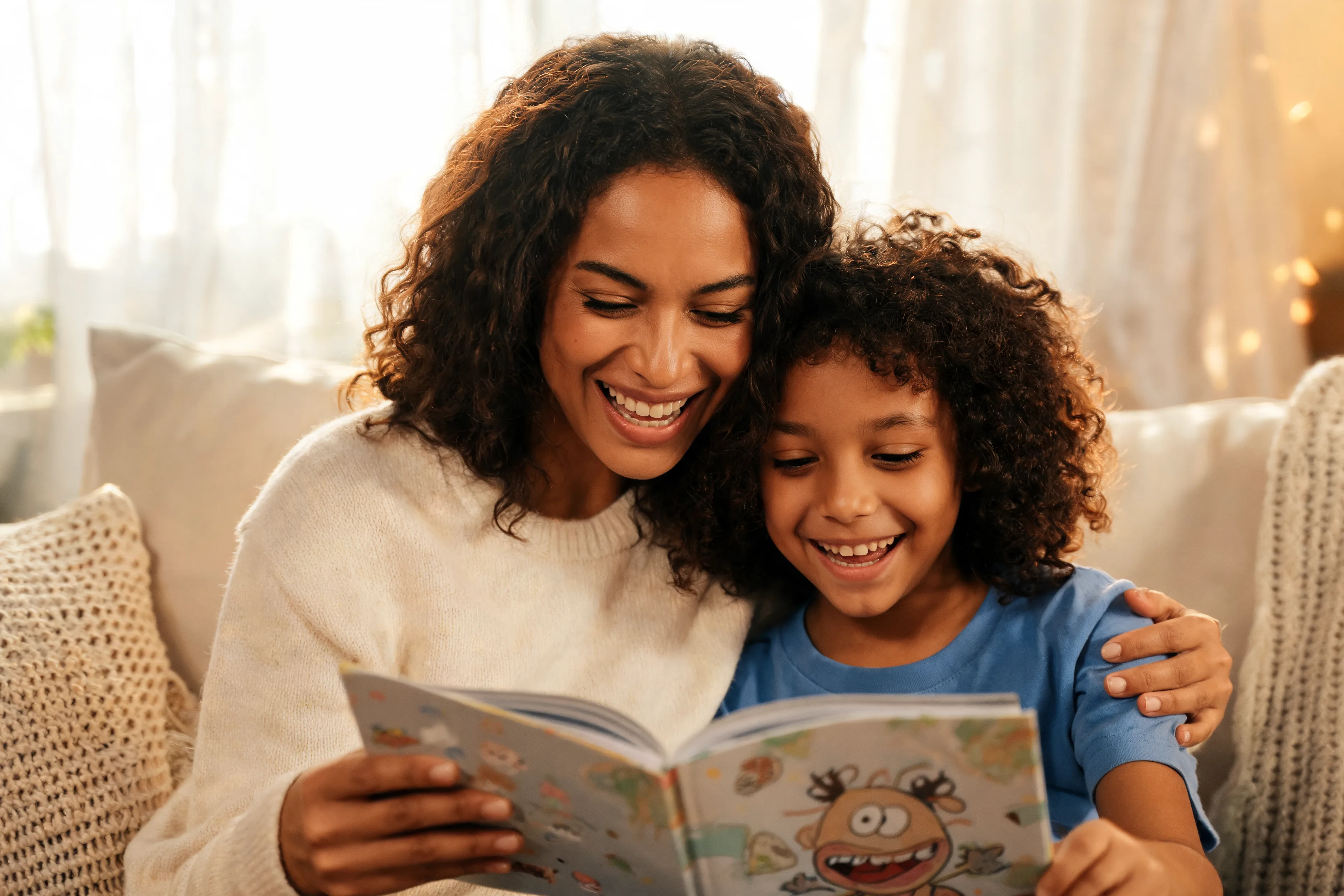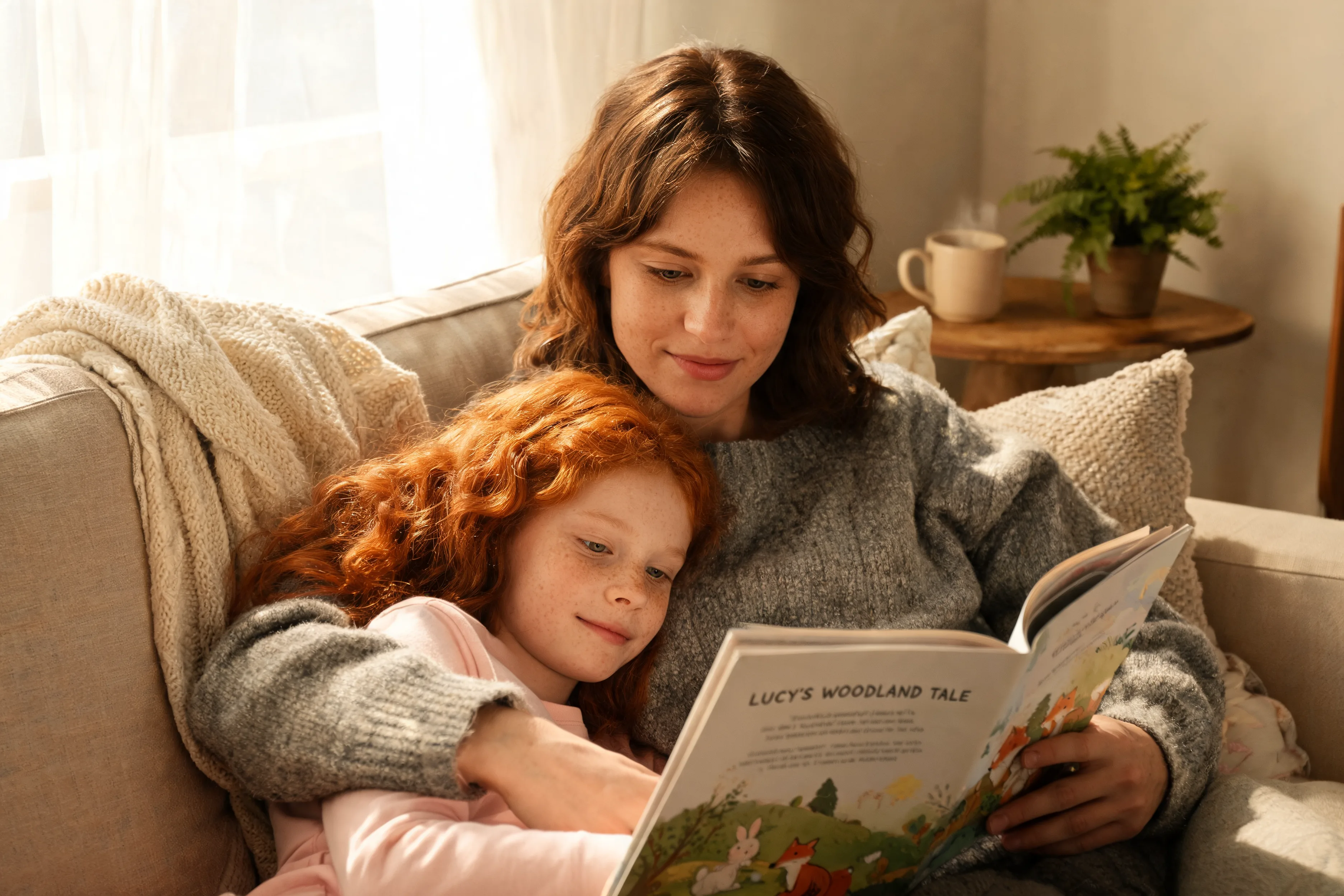

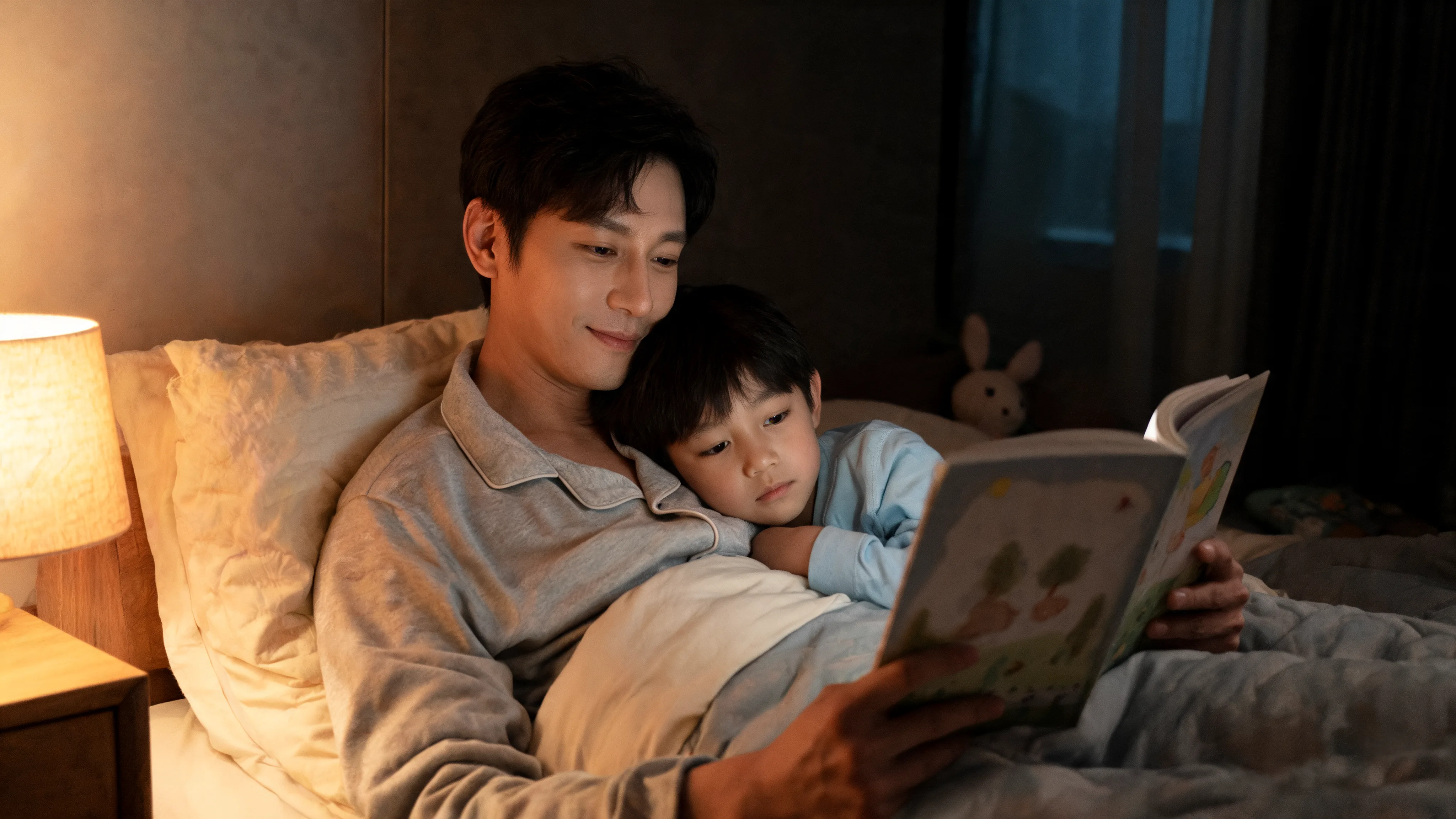
There is a particular kind of quiet that settles over a house when a parent is reading to a child. The kid leans in. The parent's voice softens. Whatever was loud or hard about the day starts to recede. For ten or fifteen minutes, you are both in the same place, doing the same thing, with no one expecting anything from either of you.
That quiet is doing more than you might think.
Reading with your child is one of the most underrated parenting acts in modern life. Not because of vocabulary, or test scores, or any of the things schools usually emphasize, although those matter too. The reason it matters is that it builds something most parents say they want most: a real, durable, deeply felt bond with their child.
If you've wondered whether the daily ritual of reading with your child is doing anything beyond passing time before bed, this article is the answer. It's also a quiet argument for keeping it up far longer than you probably planned to.
The Bond Isn't Automatic
Most articles about reading together skip this part, so let me start with it.
Sitting on the same couch with a book open is not the same as connecting. A parent who is reading aloud while half-checking their phone is not bonding. A bedtime story that has turned into a comprehension quiz is not bonding. A child who is being told their reading is wrong, slow, or not improving fast enough is not bonding either.
The bond comes from specific ingredients, not from the activity itself. When those ingredients are in place, ten minutes of reading does more than an hour of side-by-side screen time. When they are missing, even a long bedtime ritual can feel hollow to both of you.
What's Actually Happening When You Read Together
A child being read to by a parent is doing several things at once that almost nothing else in modern life replicates.
Their nervous system is regulating against yours. When a child sits close to a calm adult and listens to a steady voice, their breathing slows and their heart rate gradually matches the adult's. Researchers call this co-regulation, and it is part of how children learn to soothe themselves when adults aren't around.
Their brain is also tracking the same words your brain is producing, which means you are both, in a real way, in the same imagined world for the duration of the story. Shared attention of this kind is rarer than it sounds. Most of the time, even when families are together, each person is in a slightly different mental room. A book is one of the few things that puts you in the same one.
And underneath all of this, something simpler is happening. Your child is being held, or close to being held. Your voice is the soundtrack. Whatever feeling the story produces gets quietly tied to your presence. Years from now, the books they remember will not just be remembered as books. They will be remembered as you.
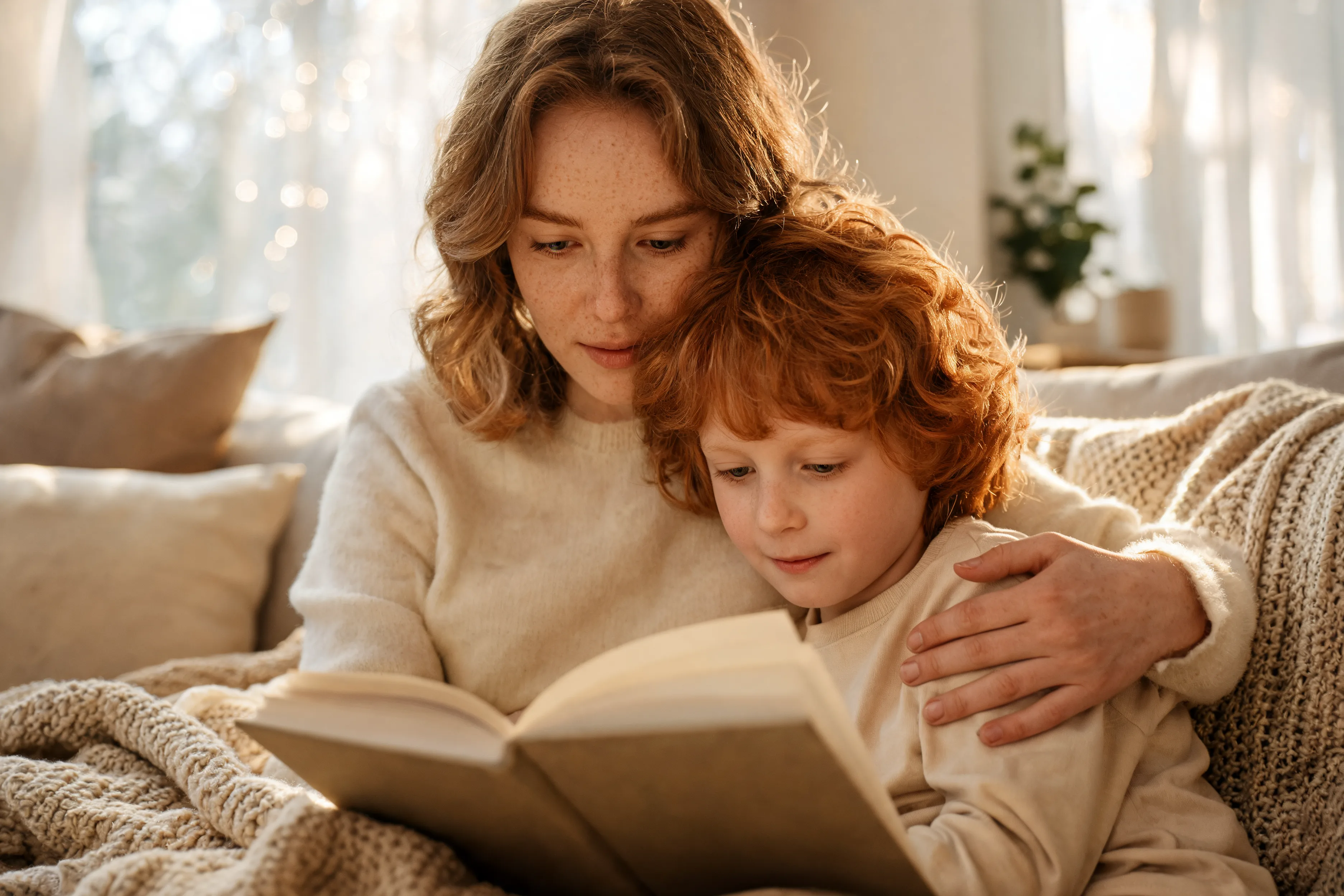
The Four Ingredients That Turn Reading Time Into Bonding Time
If you have ever wondered why some bedtime stories feel close and warm and others feel like a chore, this is usually why. The bonding effect of reading with your child shows up reliably when these four things are in place.
Physical closeness
A child on your lap, against your shoulder, or tucked under the same blanket. Closeness is part of the equation, not optional.
Shared attention
No phone, no half-listening, no thinking ahead to tomorrow's email. Children sense the difference instantly.
Pressure-free presence
You are not testing them. You are not correcting every word. The reading is the reward, not a hoop they have to jump through.
A story you both care about
This usually means letting your child pick the book, even when their pick seems too easy or too silly.

Why Books Let You Say What You Can't Say Directly
Children rarely answer direct questions about their feelings. "How was your day?" gets a shrug. "Are you nervous about the new school?" gets silence. Anything that sounds like an emotional interview tends to bounce off.
Books do something different. A book gives a child a third character to point at. A character who was scared on the first day. A character who felt left out at lunch. A character who did the brave thing and felt proud, or did the wrong thing and felt sorry. Once the feeling exists in someone else, it becomes safe to talk about.
The conversation then almost writes itself. Have you ever felt like that? When did you feel that way? What helped? A bedtime story can become a five-minute window into your child's inner life that no direct question would have opened.

When the Book Is About Them
One of the quietly powerful things about reading together is the message it sends, without anyone saying it out loud: I think you are worth this time. A child who is read to night after night learns, somewhere underneath language, that they are someone worth sitting still for.
This effect intensifies when the story itself is about your child. When the character has their name, their hair color, their best friend, their pet, or the silly things they would do, attention changes. The book stops feeling like an assignment and starts feeling like a mirror.
That is why a personalized children's book can be more than a novelty. It gives the parent and child a shared story where the child is not only listening. They are participating.
Children build identity through repeated stories: the stories they hear, the stories they tell about themselves, and the stories adults choose to share with them. A personalized story can say, quietly and powerfully, "you belong here."
Create a personalized book that turns story time into something your child wants to repeat.
Add their name and details from their world, then read it together as part of the nightly rhythm. The goal is not a perfect reading lesson. It is one more warm, repeatable moment with a book between you.
Personalize Your Child's BookKeep Reading Aloud After They Can Read Alone
Many parents stop reading aloud once a child can decode words independently. It makes sense on paper. The child can read now, so the parent steps back. But connection is not the same as instruction.
Older children still benefit from being read to. They can listen to stories above their current reading level, ask bigger questions, and relax into the sound of a familiar voice without having to perform. For tweens, shared reading can become one of the rare parent-child spaces that does not feel like monitoring.
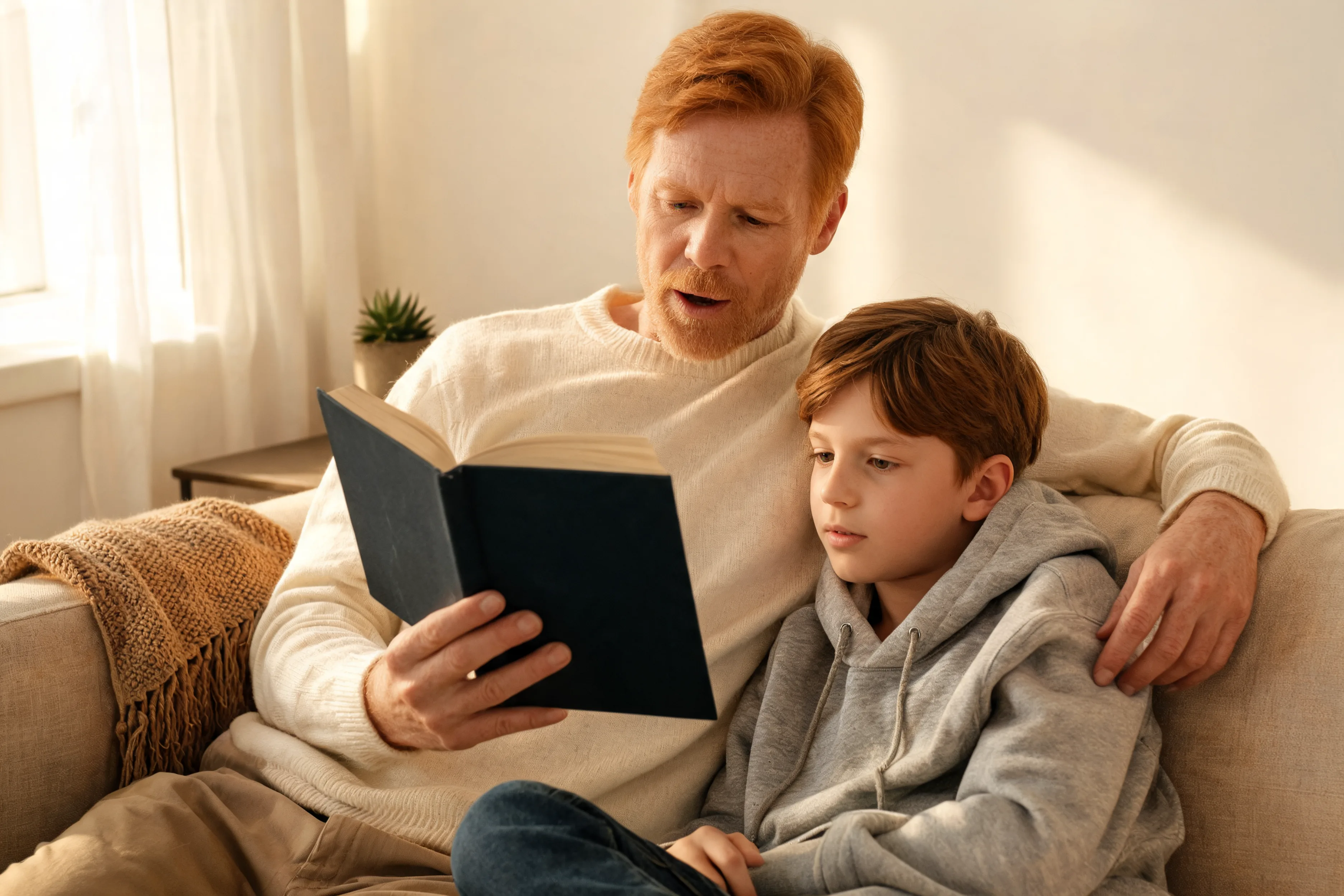
How to Keep the Ritual Going Without Forcing It
Routines beat motivation. A few low-pressure ways parents make reading together last:
- Keep the ritual small. Five calm minutes every night beats one ambitious hour that everyone starts avoiding.
- Let your child choose sometimes. The book they pick tells you where their attention already wants to go.
- Read above their reading level. Let them enjoy stories they are not ready to decode alone.
- Use audiobooks together. A shared audiobook in the car still creates shared attention and story memory.
- Do not quiz. Ask what surprised them, what made them laugh, or which character they would invite over.
- Protect the mood. If reading time becomes a fight, shorten it and lower the stakes.
The bond does not require a perfect routine. It requires repeated moments where your child feels your attention land fully on them. A short story, a chapter in the car, or one page before lights-out can count.
The Quiet Memory They Keep
Most children will not remember every title you read together. They will not remember every plot twist, every funny character name, or every page you stumbled through while tired.
They will remember the feeling: your voice, your nearness, the little pocket of time where no one was asking them to be faster, cleaner, smarter, or easier. Just close. Just listening. Just there.
That is why reading with your child builds a stronger parent-child bond. The book is the object in your hands, but the memory is the two of you.
Keep the story open.