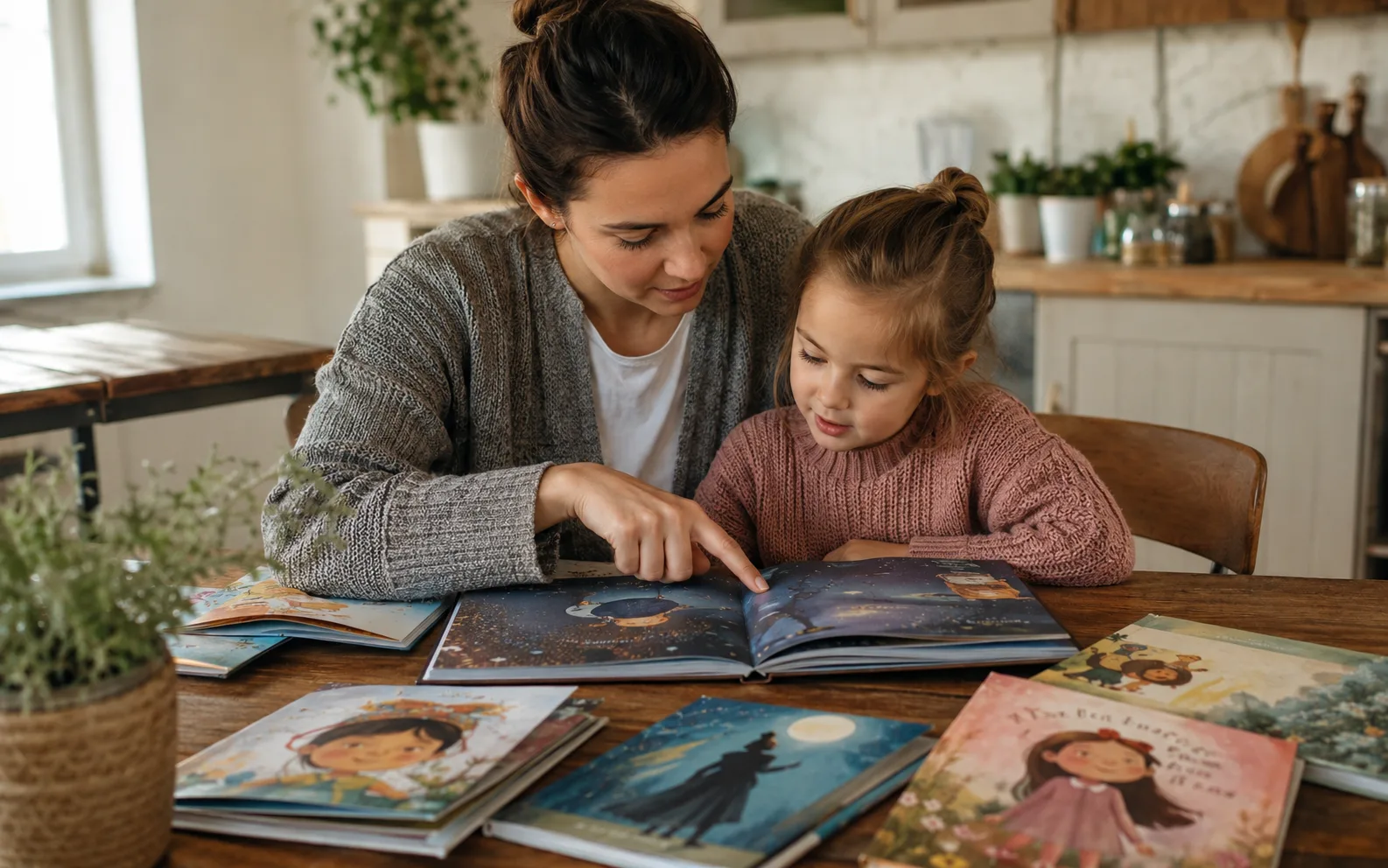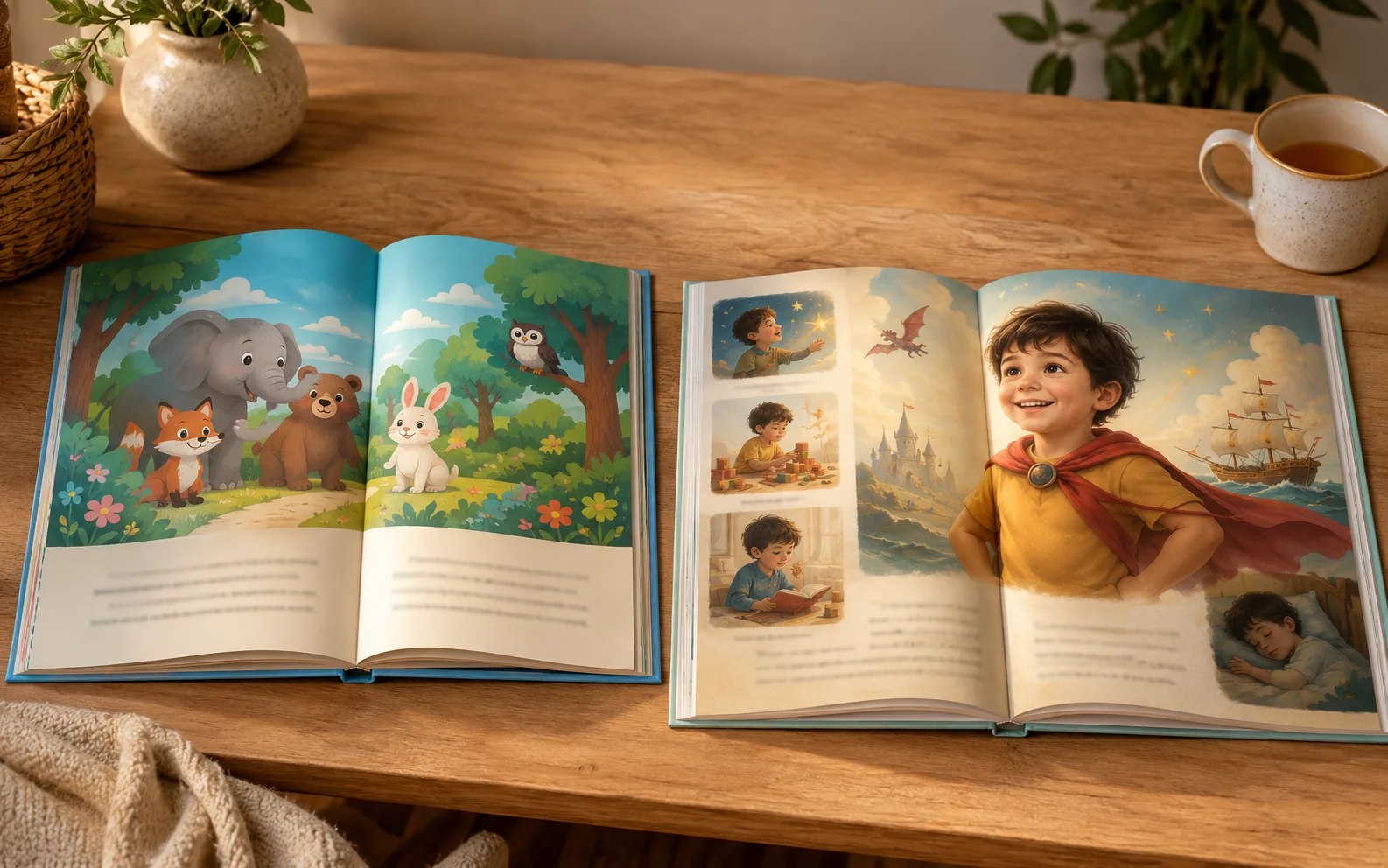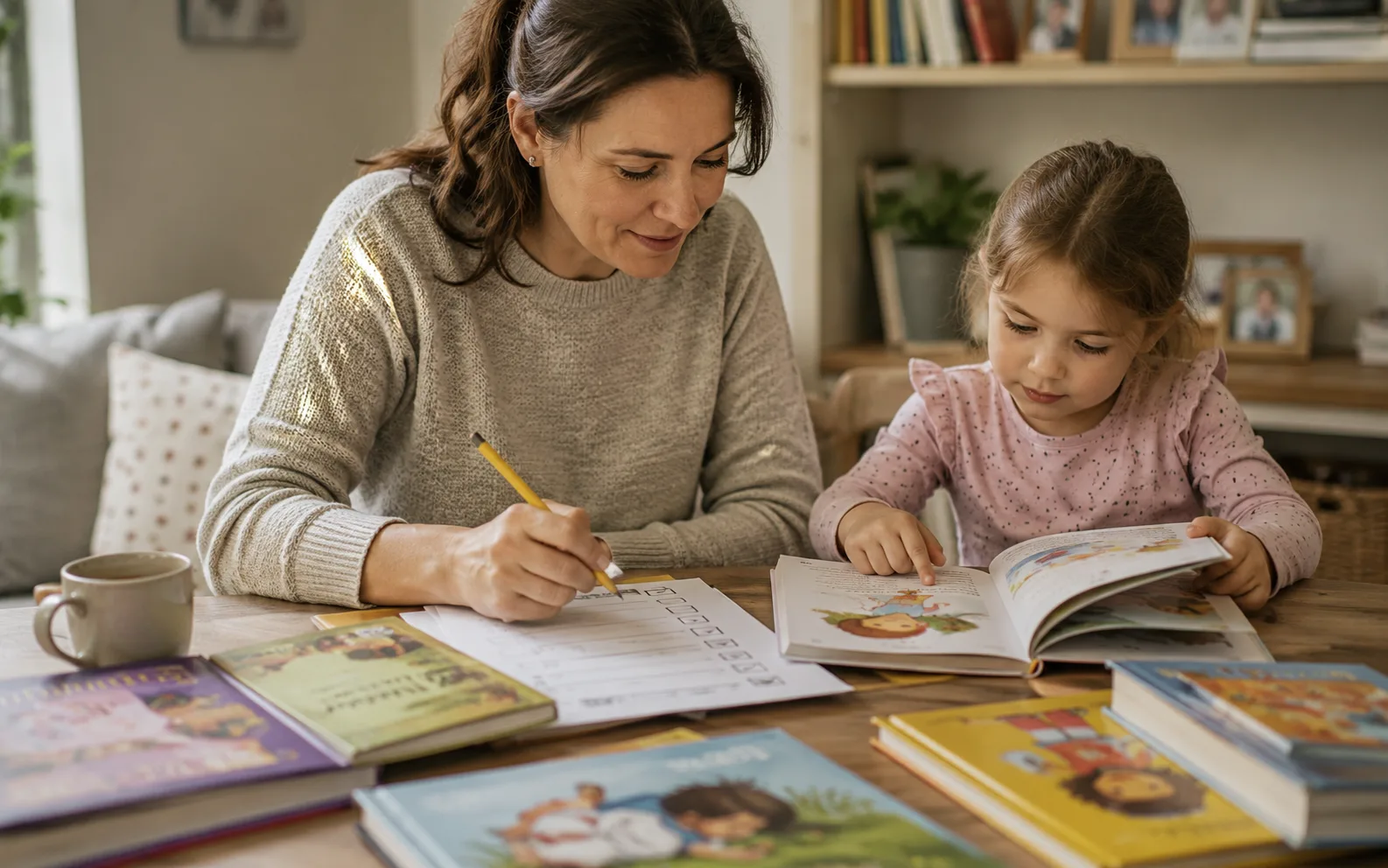

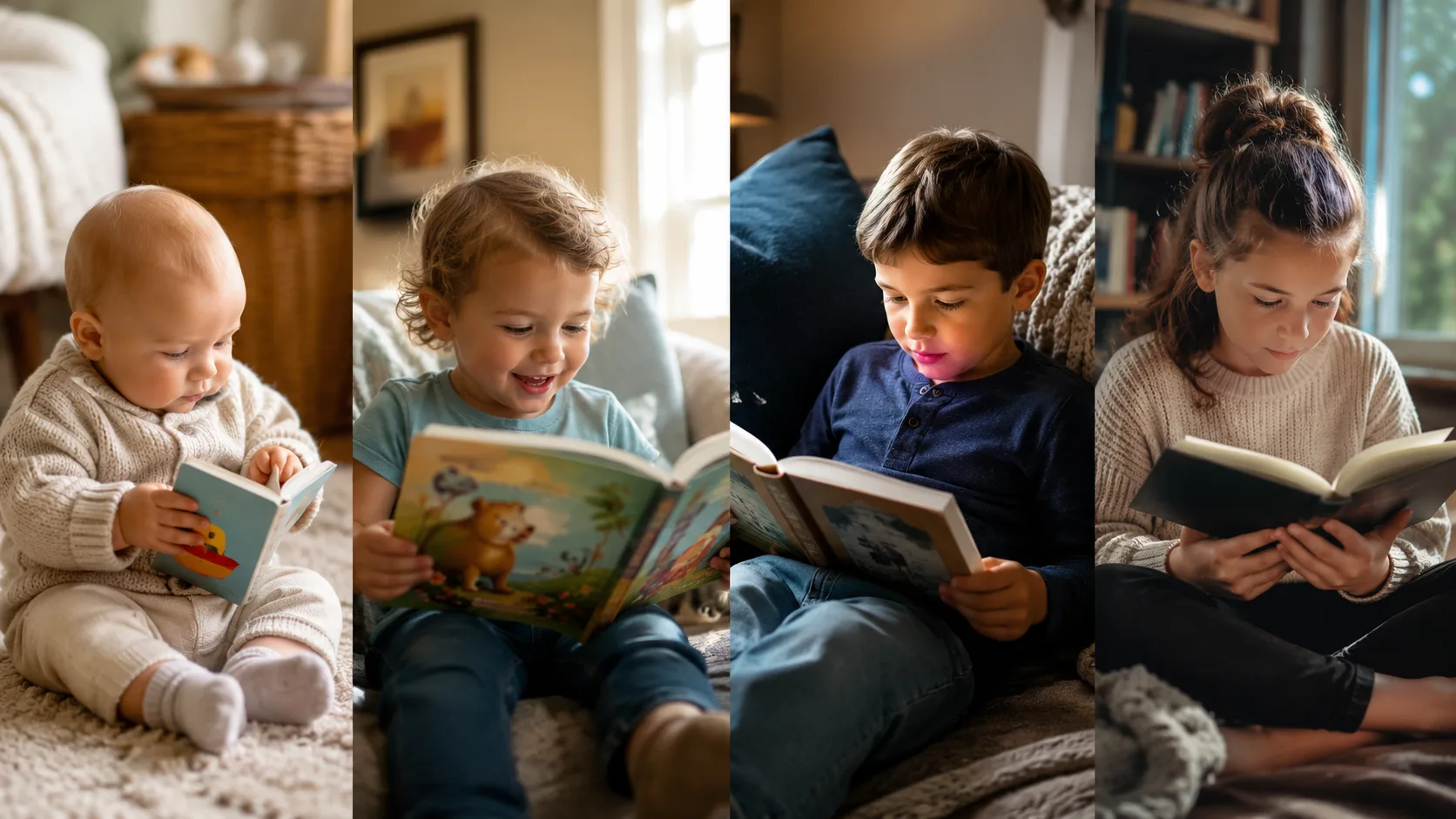
What makes a personalized book work is not the same at every age. A two-year-old responds to hearing their name in rhythmic, repeated sentences. A five-year-old responds to being the hero of an adventure. An eight-year-old needs their personality and sense of humor in the story — name alone will not hold their interest. Understanding which window a child is in changes which book you choose.
The peak personalization window is ages 4–7 — children at this stage are actively constructing their personal identity, are highly responsive to self-reference, and are in the prime window for reading habit formation.
Below age 4: format (board book) and repetition matter more than personalization depth. Above age 8: the personalization must reach personality and interest level — name-only personalization will be dismissed.
The Four Developmental Windows
Research on identity formation in childhood — particularly the work of Susan Harter (University of Denver, 2012) on self-concept development — shows that children's sense of personal identity consolidates in clearly distinct stages.[1] These stages map directly onto what makes a personalized book effective at each age.
Ages 2–3: Toddlers
Name recognition, repetition, and durable format — not story depth
At ages 2 to 3, children are in the early stages of emergent literacy — the pre-reading skills that precede formal reading instruction. Research by Whitehurst and Lonigan (State University of New York / Florida State University, 1998) identifies the key emergent literacy skills at this stage: phonological awareness, print knowledge, and oral language.[2] [2] Personalization at this age contributes primarily through name recognition — one of the earliest and most powerful forms of print awareness — and through the engagement that comes from hearing a familiar sound (their own name) in a story context.
The most important factor at this age is format, not content. A toddler given a standard paper book to handle independently will damage it. Board books — thick laminated pages — are the appropriate format. If the personalized book provider does not offer board book format, the book is best used for parent-led read-aloud sessions only, not independent handling.
- Board book format (thick pages)
- Child's name in large, clear type
- Repetitive sentence structure (name appears multiple times)
- Bright, high-contrast illustrations
- Short text (4–8 words per page maximum)
- Simple, recognizable concepts (animals, colours, family)
- Standard paper pages — will not survive
- Long narrative arcs — this age cannot follow them
- Complex humor or irony
- Interest-specific personalization — interests are not yet defined at 2–3
- Large amounts of text per page
Ages 4–5: Preschoolers — Peak Window Opens
Identity is forming — the child is ready to see themselves as a character
Ages 4 to 5 mark a significant shift: children begin to construct a stable self-concept. Susan Harter's developmental research documents that at this stage, children start categorizing themselves by concrete observable features — "I have red hair," "I like dinosaurs," "I am good at jumping" — and they are highly responsive to having these features reflected back.[1] This is the beginning of the psychological window where personalization becomes most powerful.
At this age, a child hearing a story where they are the protagonist — where their name, their specific interest, and their role drive what happens — experiences something qualitatively different from simply hearing a story. They are being reflected. The self-reference effect, documented by Rogers, Kuiper & Kirker (University of Waterloo, 1977), shows that self-relevant information is processed more deeply at this age than neutral information.[4]
- Child as active protagonist who makes choices
- At least one interest or personal detail in the plot
- Age-appropriate humor (physical, silly, role-reversal)
- Story length 400–700 words (approximately 15–20 pages)
- Illustrations that include the child's described appearance
- Name-only personalization — this age will notice the difference
- Sentimental tone ("you are so special") — this age wants adventure, not affirmation
- Stories that are too long — attention spans are still developing
- Adult vocabulary without illustration support
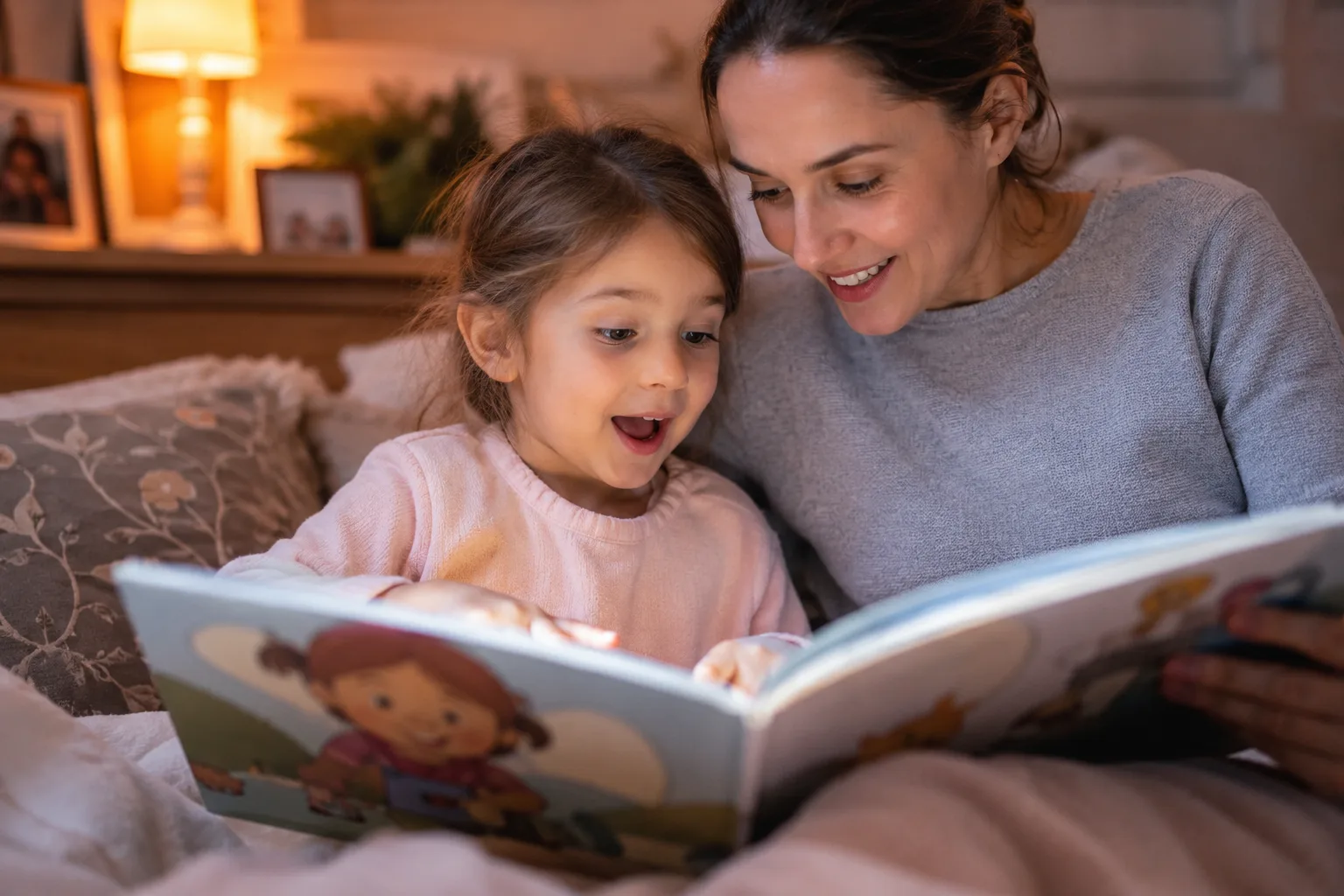
Ages 6–7: Early Readers — The Full Peak Window
The child is learning to read — the personalized book needs to reward that effort
Ages 6 and 7 are where the personalization effect and reading development intersect most productively. Children at this stage are learning to decode independently — sounding out words, recognizing sight words, building fluency. Research by Keith Stanovich (University of Toronto, 1986) documented the Matthew effect in reading: children who read more early develop vocabulary and comprehension faster, making it easier to read more.[5] The motivational role of a book that feels relevant is therefore especially significant at this stage — a child motivated to re-read a personalized book is building exactly the reading volume that compounds literacy growth.
At this age, humor becomes a primary engagement driver. Children 6–7 are in what researchers of child development call the stage of concrete operational thinking — they appreciate jokes, irony (at a basic level), cause and effect, and the satisfying resolution of a problem. A personalized story that makes them laugh about something specific to their world outperforms a sentimental one by a significant margin for this age group.
- Humor matched to 6–7 year old sensibility (silly, surprising, physical)
- Protagonist with clear agency — makes decisions, faces a problem, finds a solution
- Vocabulary slightly above their current independent reading level
- Interest-specific personalization (dinosaurs, space, sport, art)
- Appropriate length for a child to finish in one sitting (500–900 words)
- Baby-level text — children this age notice when a book is "too easy"
- Overly sentimental framing — "you are amazing" tone will be dismissed
- Name-only personalization — this age group will actively find it disappointing
- Stories without a clear problem or resolution arc
Ages 8–10: Middle Childhood — Personality Over Name
Name alone will be dismissed — personalization must reach personality level
By age 8, children have a well-developed self-concept and established preferences. They are also highly sensitive to content that feels babyish or insincere. The self-concept research of Susan Harter (2012) shows that at this stage, children compare themselves to peers, have internalized standards for their own competence, and are aware when something does not match their actual self-image.[1] A personalized book that does not reflect their actual personality — their specific humor, their real interests, their reading level — will feel more like a label than a recognition.
For this age group, the personalization needs to work harder. Interest specificity is not enough ("she likes reading" will not do). The humor needs to match their actual sensibility, not a generic child humor template. The story needs a real narrative arc — not a picture book structure — at a reading level that does not feel condescending.
- Deep interest-specific personalization (not just "likes sport" but "goalkeeper who overthinks penalties")
- Reading level matching 8–10 years (more text, less illustration per page)
- Humor that is sophisticated for the child's actual sensibility
- Story arc with real stakes, not resolved too easily
- Personality traits, not just physical description, in the story
- Picture book format — will feel babyish
- Name-only or shallow personalization — the child will notice and be disappointed
- Sentimental or inspirational tone without irony or humor
- Stories obviously written for younger children
Personalized books at any age do not address decoding difficulties, dyslexia, auditory processing challenges, or attention disorders. Age-appropriate personalized books support reading motivation — they do not provide reading instruction. If a child at any of these stages is struggling with the mechanics of reading (not just motivation), the right support is a reading specialist, not a personalized book.
The guidance above also applies to children who are developing on a typical timeline. Children with significantly different developmental profiles — whether advanced or delayed — may need personalization calibrated to their developmental stage rather than their chronological age.
Tell us their age, their interests, and what makes them specifically them. We build the story from there.
Preview inside pages before ordering. Confirm the personalization reaches the right depth for their developmental stage. Then decide.
Preview Their Story