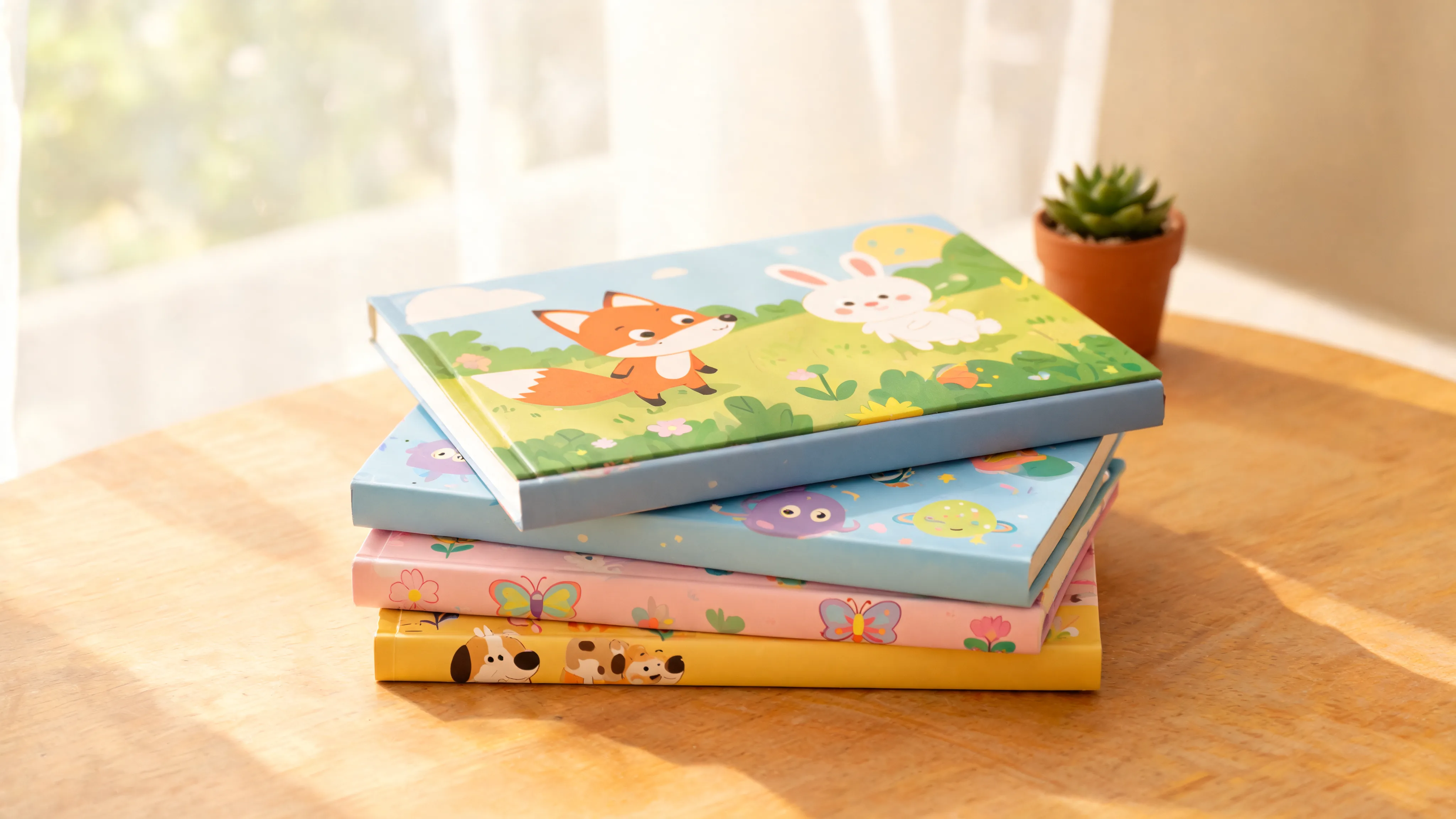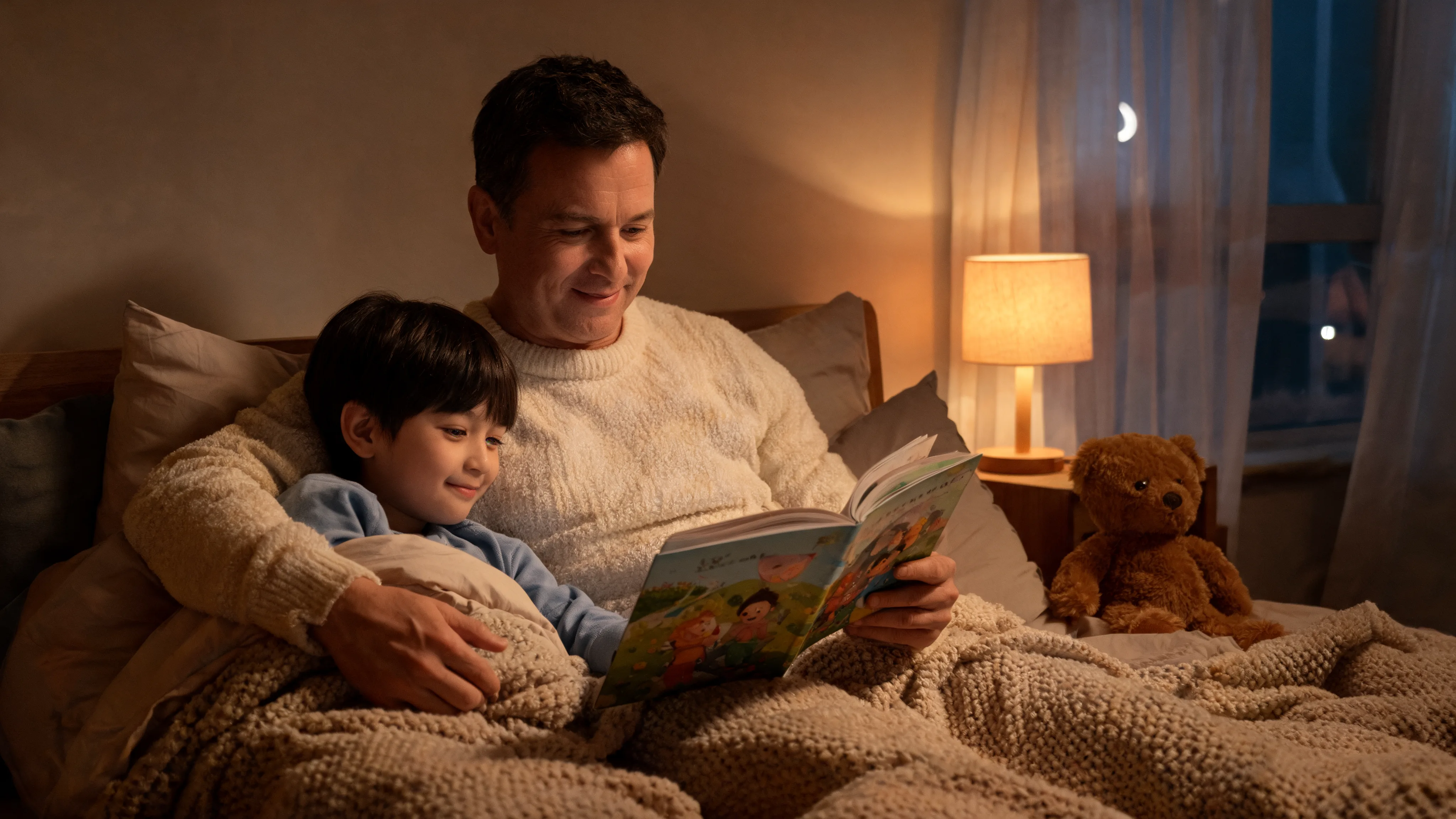

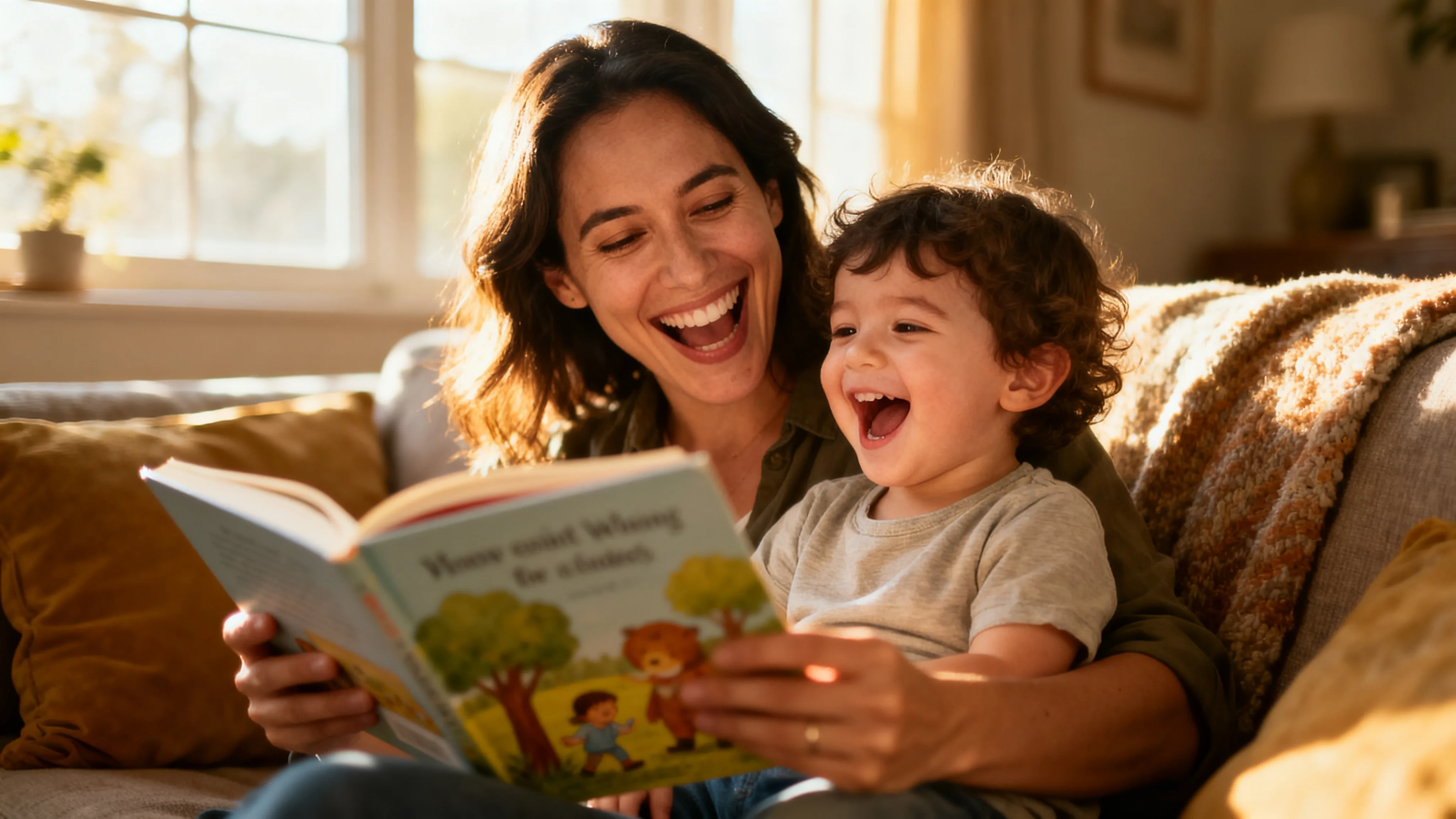
You've tried the bedtime stories. You've bought the colorful picture books with the great reviews. You've sat down on the couch with a hopeful smile and the latest library haul — and your child has wriggled away within ninety seconds, somehow convinced the bookshelf is on fire.
If this sounds familiar, take a breath. You're not failing them. They're not broken. And the honest truth is that the answer almost never is "more reading time" or "stricter screen rules."
After years of conversations with parents in this exact spot, one pattern shows up again and again: kids who don't like books usually don't hate reading itself. They hate something specific about how reading currently feels in their life — and once you figure out the thing, the resistance often softens faster than you'd expect.
This is a guide on how to make reading fun for kids who don't like books, written for the parent who's already tried the obvious advice and is wondering what's left.
Why Your Child Might Be Pushing Books Away
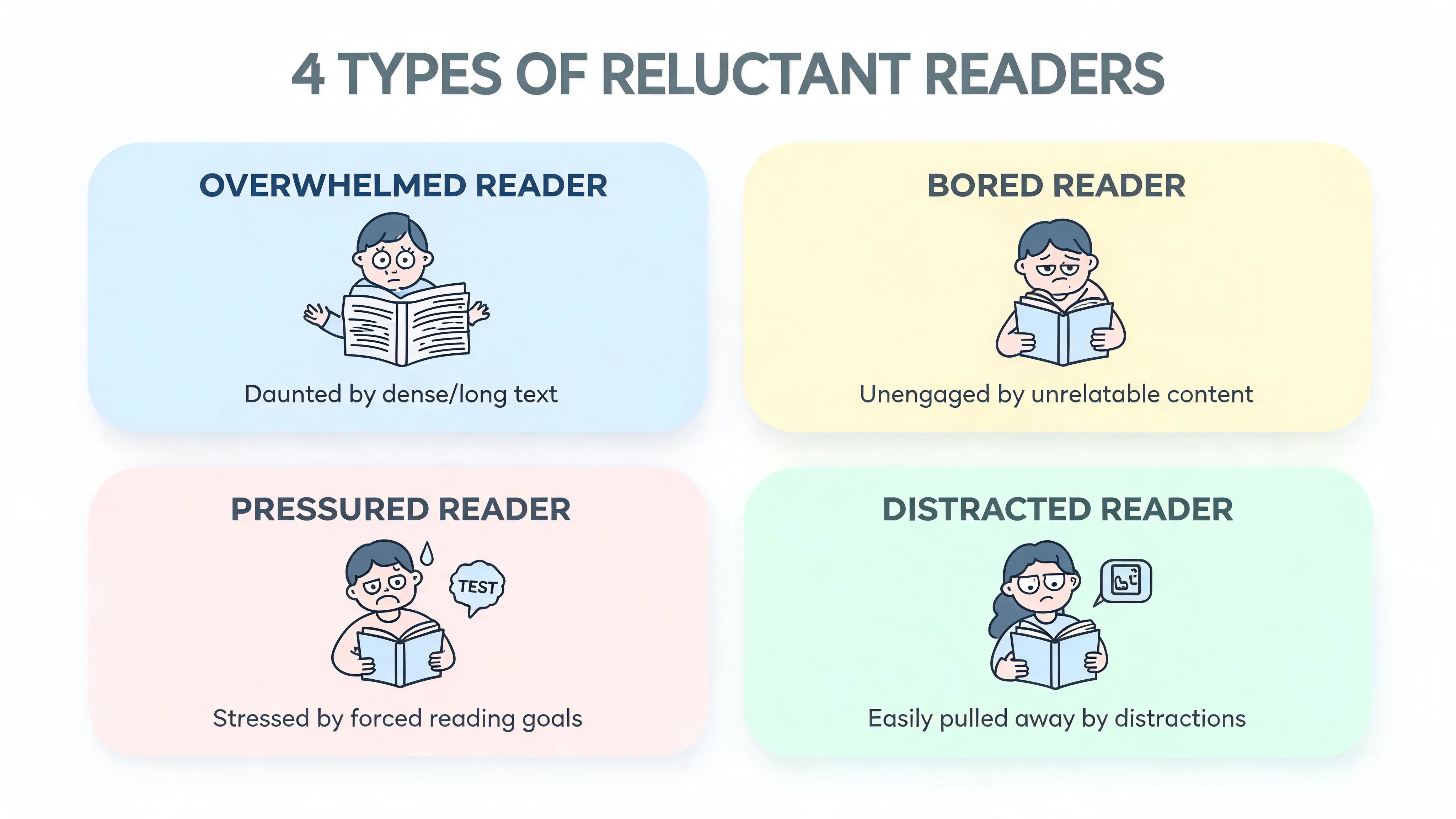
Before any tactic, it helps to understand what's actually going on. Reluctant readers usually fall into one of a few quiet categories — and the best approach depends on which one fits your child.
The "wrong book" reader
They're not against reading. They've just been handed books that don't match their personality, sense of humor, or current obsession. A six-year-old deeply into sharks and farting noises is not going to be moved by a polite tale about a polite rabbit.
The "too much pressure" reader
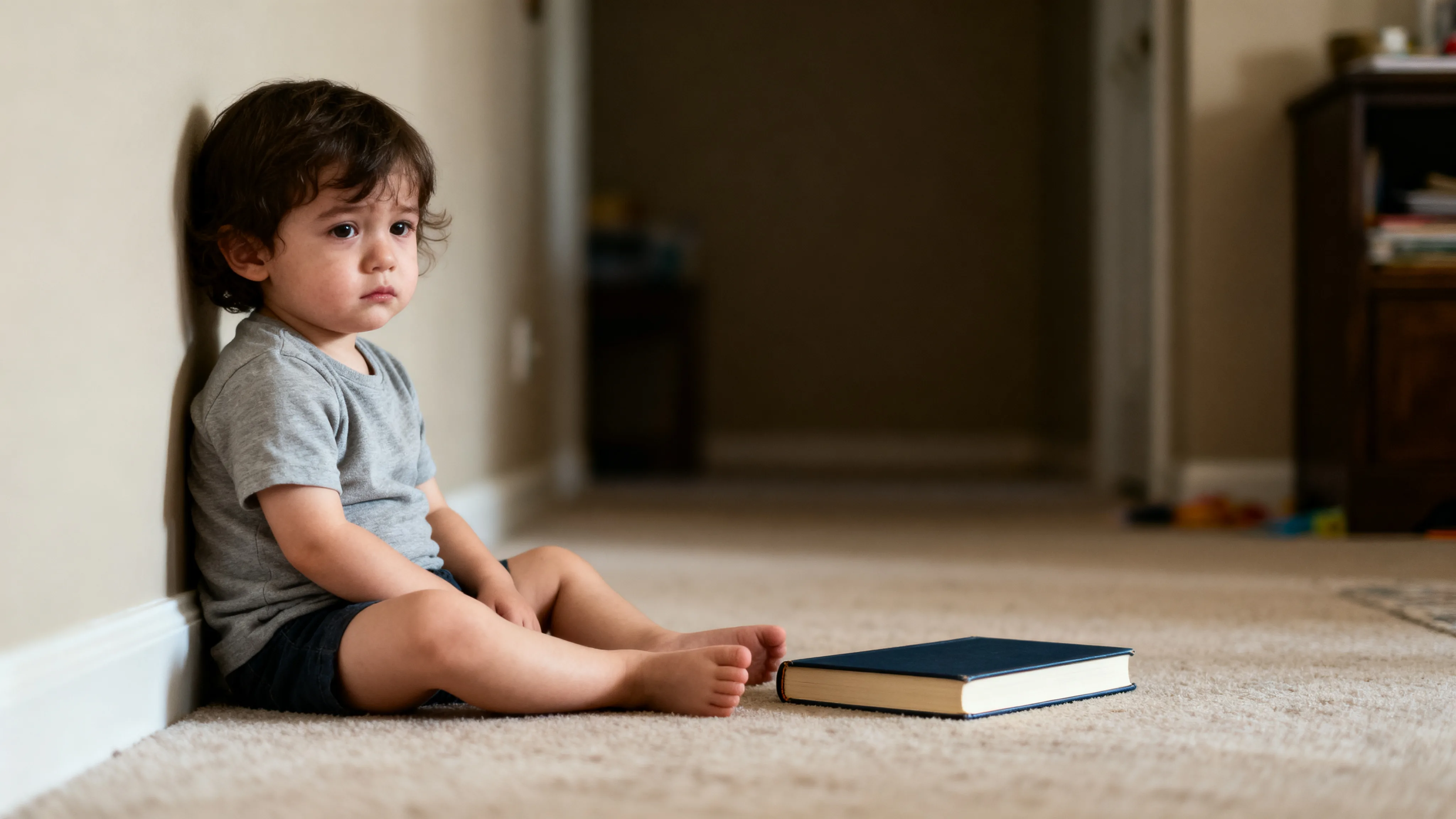
School has turned reading into a graded performance. Words have become tests. The cozy couch story has started to feel like more homework. Refusing is the only escape valve they have.
The "I can't keep up" reader
Reading is harder for them than for their classmates, and they know it. Their refusal is a defense mechanism. Pushing harder makes it worse, every time.
The "not yet" reader
Some kids just take longer to find their reading window. Most of them do, eventually — often around age seven or eight. The children who get there with their love of stories intact tend to be the ones whose parents didn't panic in the meantime.
Notice that none of these categories is "lazy" or "doesn't appreciate books." Resistance to reading is almost always a signal — about the book, the context, the pressure, or the timing. Once you can name which one is happening at your kitchen table, you can do something about it.
The Mindset Shift That Changes Everything
The most powerful thing most parents can do is uncouple "reading" from "school work."
For a few weeks, stop tracking. Stop asking your child to read three pages out loud. Stop using reading as the chore that has to happen before they're allowed screens. Try, just for a little while, to make reading look more like dessert than vegetables.
This sounds counterintuitive. Won't they read less? In the short term, sometimes. In the medium term, almost always more. Pressure breeds avoidance. Curiosity breeds habit. Most parents who try this for two or three weeks notice the same thing: the resistance softens before the reading even resumes.
Six Practical Ways to Make Reading Feel Like Play
These are the moves that actually shift the dynamic at home. You don't need all of them. Try the two or three that fit your kid.
1. Follow their weirdest interest, even if it embarrasses you
If your child is obsessed with poop jokes, buy the gross-out books. If everything has to be about superheroes for the next eight months, fine. The goal right now is not literary taste. It is reconnecting books with fun in your child's nervous system.
The Dog Man series, Captain Underpants, and Diary of a Wimpy Kid have rescued more reluctant readers than any official reading list ever made. The graphic novel Bone is a gateway drug. Anything by Mo Willems works at the younger end. The "How Not to" picture books deserve their reputation.
If your child only wants to read about dinosaurs, go all-in on dinosaurs. They are not stuck there forever. They are starting from where they are.
2. Let them pick — and let "too easy" books count
A lot of children hit a wall because well-meaning adults keep nudging them toward books that are slightly above their level. That's school's job, not yours. At home, let them re-read the same picture book they "should have outgrown" two years ago. Comfort reading is real reading.
A child who chooses to revisit a book they love is doing exactly the work that builds fluent, lifelong readers. The kid who is forced through a "more appropriate" book they didn't pick is, very often, the kid who quietly closes the cover the moment your back turns.
3. Use humor as a gateway
There is a reason kids gravitate to silly books — humor lowers the emotional stakes. A child who is laughing isn't worried about decoding every word perfectly. They're enjoying themselves, which is the entire point at this stage.
This is also where personalized stories tend to shine. When a child becomes part of the story — when a book uses their own name, their best friend's name, or the dog they argue with every morning — the experience often shifts from "homework" to "this is mine." A good personalized book for kids leans into that recognition and pairs it with humor and surprise. It's one reason many parents notice their reluctant reader will happily sit through a story about themselves when they wouldn't sit through anyone else's.
4. Read aloud past the age they "should" stop needing it
There's a strange unspoken rule that once a child can read on their own, you stop reading to them. Drop that rule.
Children whose parents continue reading aloud to them through age ten and eleven develop a richer vocabulary, follow more complex stories, and — and this is the part that really matters — keep associating books with closeness. Five minutes before bed counts. A chapter on a long car ride counts. The point is not volume. It is connection.
5. Count graphic novels, audiobooks, and comics
Reading is reading. Audiobooks build the same vocabulary and story comprehension as reading on the page. Graphic novels develop visual literacy and surprisingly complex narrative skills. Comics get reluctant readers fluent in dialogue and pacing.
None of these are second-tier. A child who has worked their way through every Dog Man and listened to four Roald Dahl audiobooks has done a great deal of real reading. Pretending otherwise is one of the quickest ways to make a kid decide they hate books.
6. Build the five-minute floor, not the thirty-minute ceiling
Aim for five honest minutes of reading-related fun a day, not thirty obligated ones. Five minutes of laughing over a silly poem builds more love of reading than thirty minutes of grinding through assigned pages while everyone gets quietly tense.
The five-minute floor has another advantage: it's almost impossible to fail at. And small wins, repeated, become a habit faster than ambitious plans do.
When the Story Is About Them
There is a particular kind of magic that happens the first time a child sees their own name on a page in a real book. Many parents notice their child suddenly leaning in, asking to hear it again, going to find a sibling so they can show it off.
This is not about marketing. It is about how children experience attention. Most stories happen to other people. When the story is about them — when the silly thing happens to a character with their hair color, in a town that sounds like theirs, doing the goofy thing they would absolutely do — they feel seen. Reading becomes participation rather than consumption.
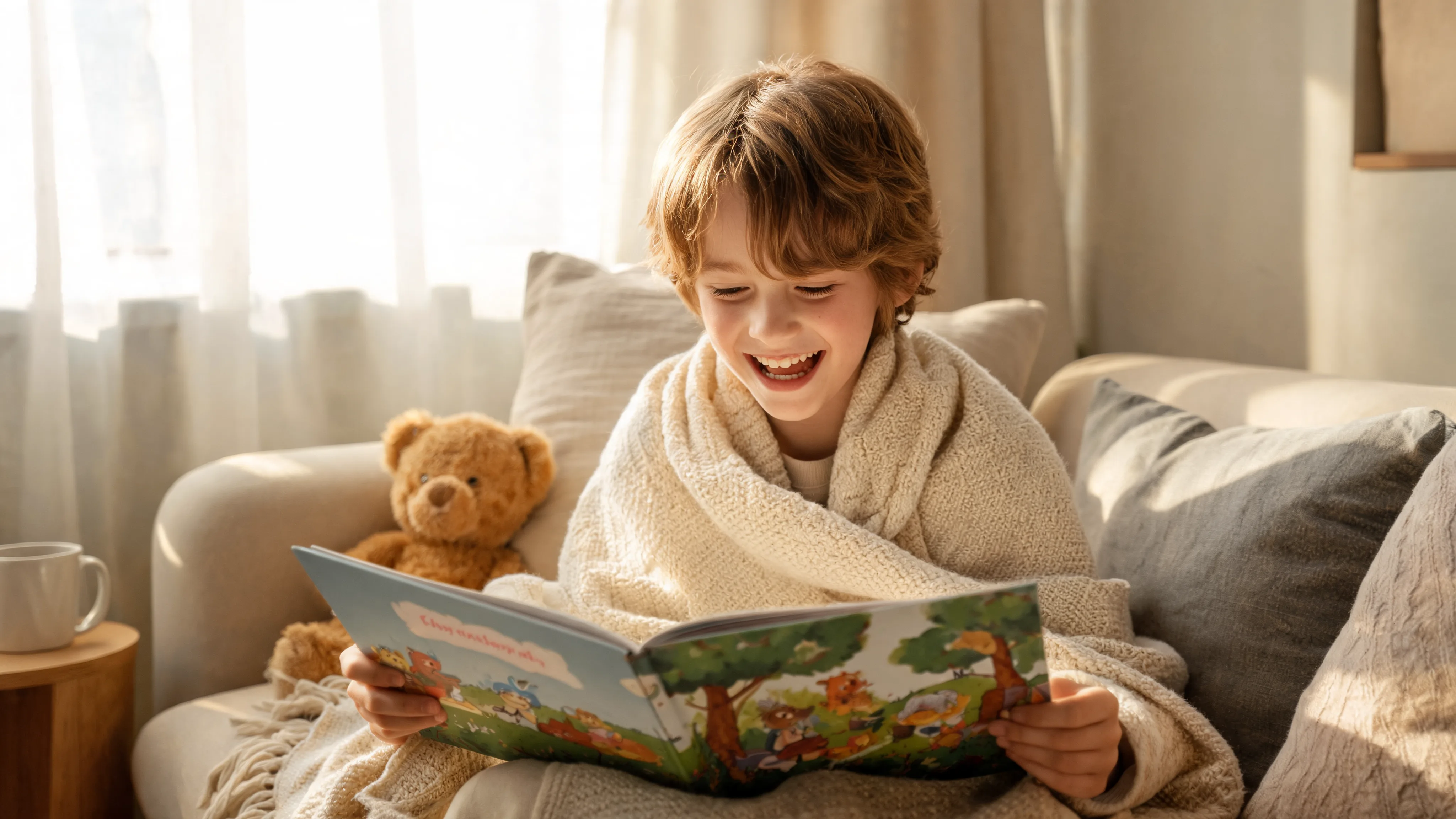
This is part of why personalized children's books, especially the funny ones, often work for kids who otherwise refuse to sit still for stories. A personalized prank book — where your child becomes the hero of a slightly chaotic, very silly adventure — turns reading into the kind of game they actually want to play. It is not a magic fix. It is one tool that, in our experience, often gets reached for a lot more than the books currently gathering dust on the shelf.
The stories that hook reluctant readers are the ones where they recognize themselves. Personalization is one way to engineer that. Following their weird interests is another. Either way, the principle is the same: recognition unlocks engagement.
Try a personalized story where your child becomes the hero of something a little ridiculous.
Add their name, a few details about their world, and watch a reluctant reader lean in for the first time in months. Built for the kids who normally refuse books — and the parents who've quietly run out of ideas.
If it lands, great. If they want to go back to dinosaurs, that's also a win. The point is one more open door.
Personalize Your Child's BookHow to Build the Habit Without Forcing It
Routines beat motivation. A few low-pressure ways parents have made reading stick at home:
- Keep a book where you eat. Even if no one reads it. Its presence is the point. A book on the kitchen counter gets picked up at random moments — homework table books almost never do.
- Put one small book in the car. Boredom does a lot of teaching. Kids who would never voluntarily open a book at the kitchen table will absolutely flip through one stuck in traffic.
- Read where you live, not where you work. Comfortable chair, beanbag, blanket fort. Not the desk where the homework happens. The body remembers context, and reading should feel like leisure space, not study space.
- Let them see you reading. Not as a teaching moment — just because. Children copy what they see modeled, far more than what they're told.
- Make library trips an outing, not an errand. They pick. You don't veto, even if their picks make you wince. The library is theirs for that hour.
- Don't grade. The bedtime read is not a comprehension quiz. The car book is not assigned reading. Keep it pressureless and they keep coming back.
When to Gently Get a Second Opinion
Most reading reluctance is a phase, a personality fit, or a context problem. None of it requires a specialist.
But there are a few patterns worth paying attention to. If your school-aged child consistently struggles to recognize letters they previously knew, frequently reverses words in ways that don't seem age-appropriate, complains of headaches or eye strain when reading, or shows real distress around any text — those are worth a conversation with their teacher and possibly a reading specialist or pediatrician.
Most kids who "hate reading" have none of these signs. But if your gut is telling you something else is going on, trust it. Early support changes the trajectory of a struggling reader more than anything you'll do at home, and there is no version of this where reaching out earlier hurts.
One Last Thing
The goal is not to produce a child who finishes a book a week by age eight. The goal is to produce an adult who, at thirty-five, still picks up a book by choice.
Almost every lifelong reader has at least one parent or teacher who, at some point, made stories feel like a place they wanted to be — not a place they had to perform. That is the work. Slow, patient, low-pressure, full of laughter wherever you can find it.
The kid who refused books at five is very often the same kid who, at twelve, is reading under the covers with a flashlight at midnight. You're not behind. You are in the middle of it.
If you want one thing to try this week to make reading fun for your kid who doesn't like books: pick something deeply, unapologetically silly. Sit close. Let your child laugh with you. That is the whole game.
Whatever the door — keep it open.