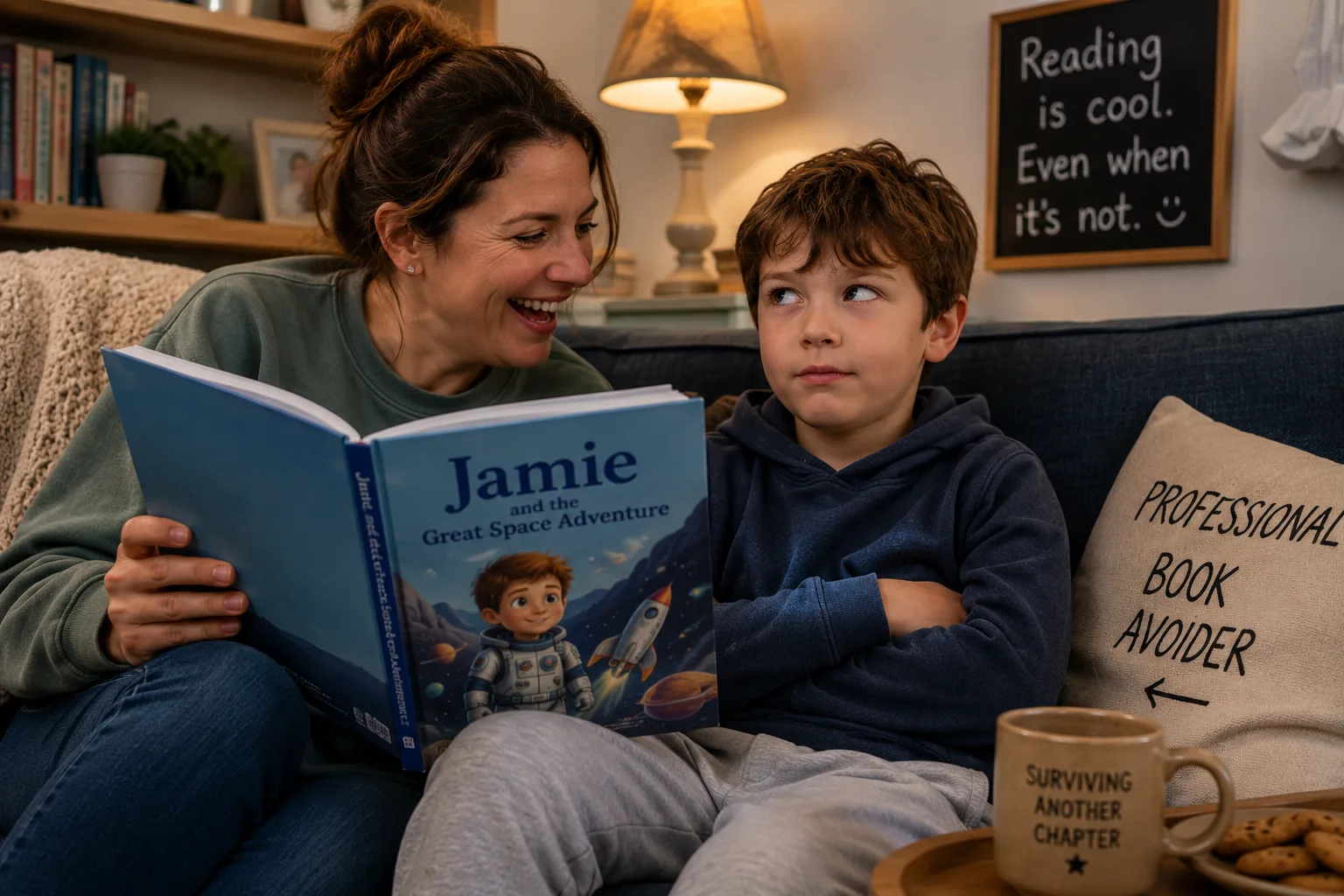

Some reluctant readers do not hate stories. They hate the feeling that reading is something done to them: a task, a correction, a test, a reminder that books belong to other people. A personalized book can sometimes change that first emotional moment — but it is not a universal fix.
Personalized books can help reluctant readers when the child’s resistance is mainly motivational: books feel boring, irrelevant, too serious, or not chosen by the child. They are much less useful when the resistance comes from reading skill difficulty, such as decoding problems, poor fluency, or repeated frustration. Motivation research treats reading engagement as multi-dimensional — interest, perceived competence, purpose, and social context all matter.[3]
The important distinction is simple: a personalized book can make a story feel more relevant, but it does not teach phonics, build decoding skill by itself, or replace specialist reading support. The National Reading Panel identified explicit instruction in phonemic awareness, phonics, fluency, vocabulary, and comprehension as core evidence-based reading domains.[5] A child who cannot comfortably access text needs support for those foundations, not only a more interesting book.
The Three Types of Reading Reluctance
Before choosing a personalized book, identify what kind of reluctance you are seeing. This is the article’s central decision point.
This is the best-fit case. If a child can read or enjoy read-aloud stories but rejects books because they feel boring or irrelevant, personalization can help because self-referenced material is processed more deeply in memory research.[1] The strongest version is not just the child’s name on the cover; it is a story where the child’s interests, humor, and choices matter.
This is a partial-fit case. Self-determination theory, developed by Prof. Richard Ryan and Prof. Edward Deci at the University of Rochester, shows that autonomy, competence, and relatedness are central to motivation.[2] A personalized book can support autonomy only if the child gets real choice: previewing it, laughing at it, choosing who reads, and stopping before it becomes another forced task.
This is the poor-fit case if the book is treated as the solution. If a child avoids reading because decoding is slow, words blur together, sounds are hard to connect, or reading aloud causes shame, personalization does not address the root problem. Pediatric dyslexia research emphasizes early identification and support rather than waiting for repeated failure.[9]
The research basis here is indirect but useful. We have strong evidence for reading motivation, choice, interest development, shared reading, and self-reference. We do not have strong randomized evidence proving that personalized books as a product category “fix” reluctant reading. This article therefore treats personalized books as a possible motivation tool, not as a reading intervention.
When Personalized Books Work Best
Personalized books have the strongest case when all four of these conditions are true.
When They Don’t Work
A personalized book is a weak solution when the real problem is not relevance. It should not be used as a shortcut around reading instruction, evaluation, or support.
| Situation | Fit | Why |
|---|---|---|
| Child says books are boring but enjoys stories, jokes, games, or role-play | Good fit | Personalization can close the relevance gap and create a first low-pressure win. |
| Child reads but abandons books quickly | Possible fit | Interest and humor may extend attention, but story quality and difficulty level matter. |
| Child resists because adults always turn reading into correction | Possible fit | Only works if used as a choice-based shared experience, not another performance task. |
| Child struggles to sound out words, read common words, or read aloud without distress | Not enough | Skill-based difficulty needs evidence-based reading support; personalization may be enjoyable but is not the intervention.[5] |
| Child shows signs of possible dyslexia or persistent reading difficulty | Seek support | Use the book as read-aloud enjoyment if the child wants it, but talk with the teacher, pediatrician, or reading specialist.[9] |
If reading regularly causes tears, panic, anger, headaches, avoidance, or shame, do not solve that by buying “a more exciting book.” A personalized book can protect the emotional side of reading, but persistent skill difficulty deserves real attention.
How to Use a Personalized Book Without Creating More Pressure
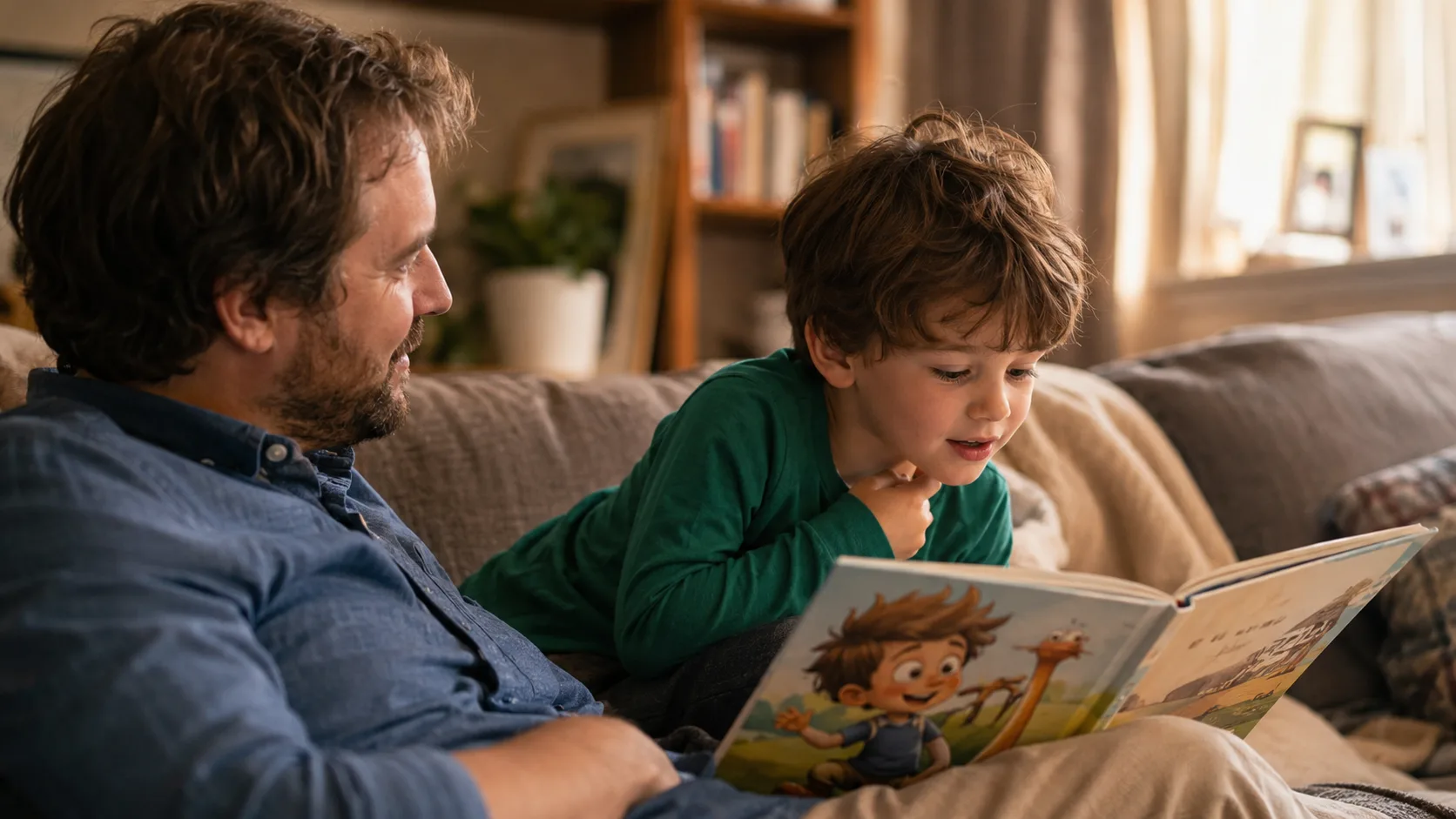
The delivery matters as much as the book. Shared reading has a long evidence base: parent-child book reading is associated with language growth, emergent literacy, and later reading achievement.[6] For reluctant readers, that shared moment must feel safe.
Introduce it as a surprise, not a lesson
Say, “This book made me think of you,” not “This will help you read.” The first sentence decides whether the child hears affection or pressure.
Let the child inspect the personal details first
Before reading from page one, let them find their name, their hobby, their pet, their joke, or their role in the story. The self-reference hook should happen before effort is required.[1]
Read aloud first, even if the child can read
If the child already associates reading with failure, remove performance from the first exposure. You can take turns later.
Stop before fatigue
Ending while the child still wants more is better than finishing the whole book and exhausting the goodwill.
Do not quiz the book
Asking comprehension questions after every page turns a gift into school. Discuss the funny part, the surprising part, or the character choice instead.

Where a Personalised Storybook Fits
A funny personalized book is especially useful for the child who thinks reading is too serious, too school-like, or too disconnected from their life. Humor lowers the emotional stakes. Interest research suggests that triggered interest can become maintained interest when the experience stays meaningful and supported.[7] In practice, that means the first laugh matters — but the story still has to be easy enough, respectful enough, and personally specific enough to keep going.
For the child who says books are boring, start with a story that makes them laugh.
Our personalised storybook is designed for children who need reading to feel less like a lesson and more like a joke they are inside. It is not for solving decoding difficulty. It is for the child who can enjoy a story — but needs the story to feel unmistakably theirs.
Preview the personalised storybookBottom Line
A personalized book can help a reluctant reader when the child’s barrier is emotional: “Books are not about me,” “I did not choose this,” “reading is boring,” or “reading always feels too serious.” It works by improving relevance, choice, and first engagement — all factors supported by motivation and interest research.[2][3][7]
But if the barrier is skill-based, personalization is not the answer by itself. The kindest thing is not to keep searching for a magical book. The kindest thing is to protect the child’s dignity while getting the right reading support.
A personalized book should open the door to reading, not become another way to push a child through it.