When Should You Start Reading to a Baby?
You do not need to wait until a baby can speak, point, or sit upright. The American Academy of Pediatrics recommends encouraging shared reading beginning at birth.

A newborn is not “reading” a story in the way a preschooler does. That is fine. Early shared reading is an interaction: the baby hears a familiar voice, sees faces and pictures at close range, and gradually begins to participate with looks, sounds, reaches, pats, and page turns.
You can start reading to a baby from birth. The American Academy of Pediatrics recommends shared reading beginning at birth. For newborns, the goal is not understanding a plot—it is warm, language-rich interaction with your voice, face, pictures, and responsive back-and-forth.
The evidence-based starting point is birth
The American Academy of Pediatrics’ 2024 literacy policy recommends shared reading beginning at birth and continuing at least through kindergarten.1 Its accompanying technical report frames early literacy promotion as support for positive, language-rich parent-child interaction, not as a race to make infants recognize words.2
That distinction should take pressure off parents. A newborn does not need to sit through a full story. You are building a routine around books and conversation.
What “reading” looks like in the first months
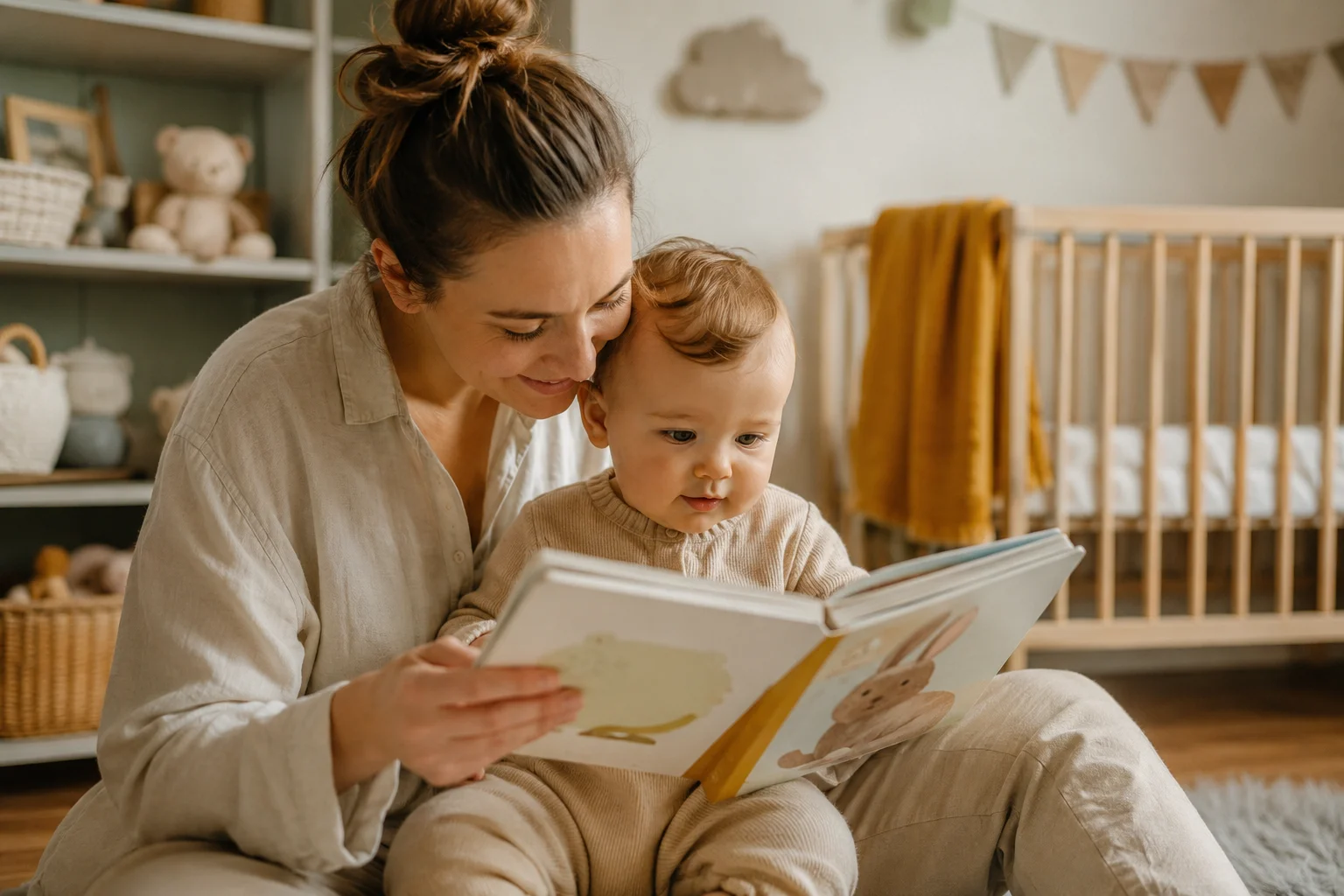
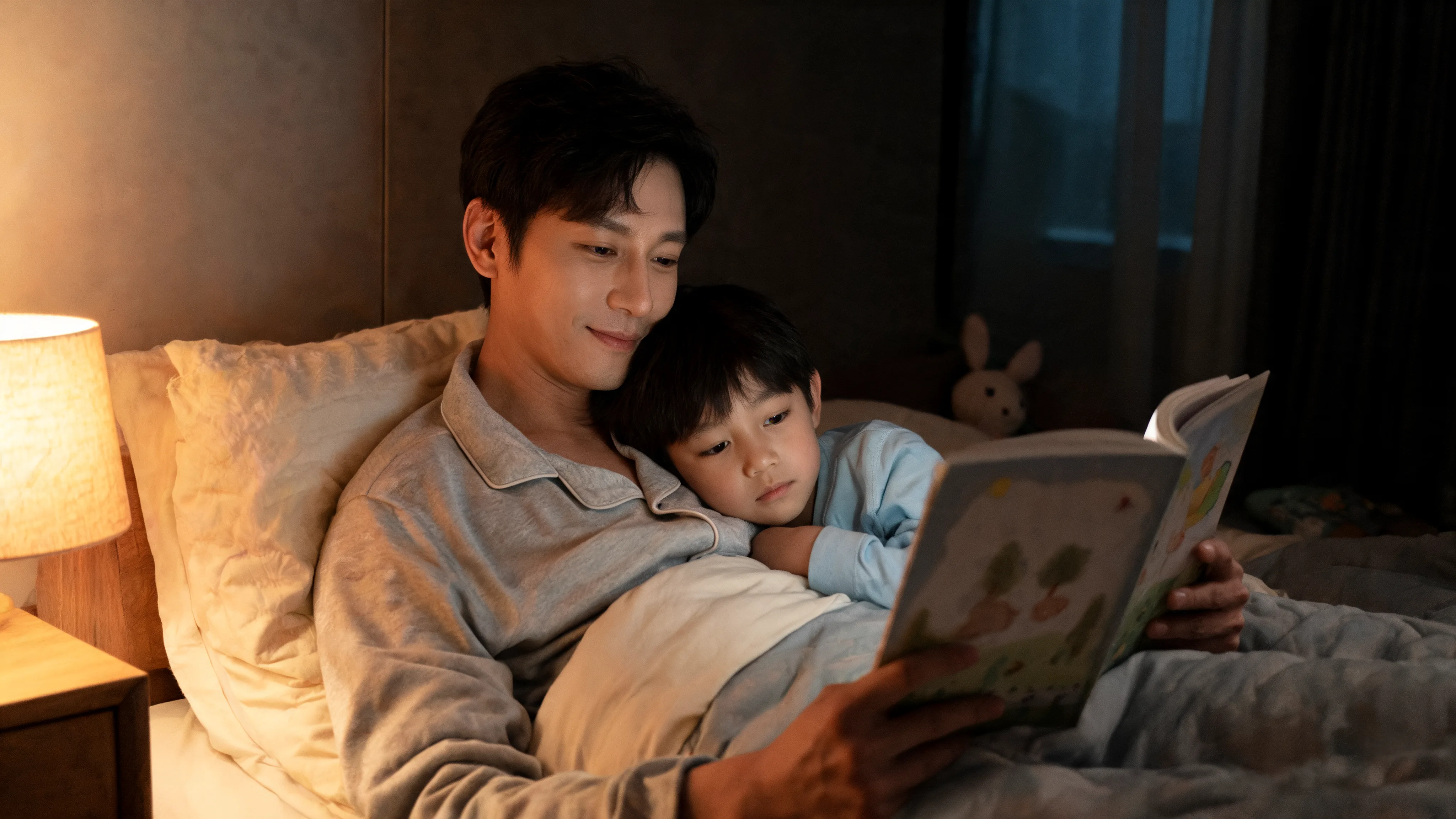
Hold the baby where they can see your face and the page. Read a few lines, name a picture, change your voice, or simply talk about what you see. If the baby looks away, pauses, fusses, or needs to move, stop. The session can be two minutes long.
HealthyChildren.org’s current baby-reading guidance encourages parents to act out pictures with face, hands, and voice, respond to what the baby touches or looks at, and follow the child’s lead rather than insisting on completing the whole book.3
What changes as the baby grows
Early months
The adult does most of the work: holding, talking, singing, and showing. Books with simple faces, clear images, rhythm, or strong contrast are easy to share.
Around the middle of the first year
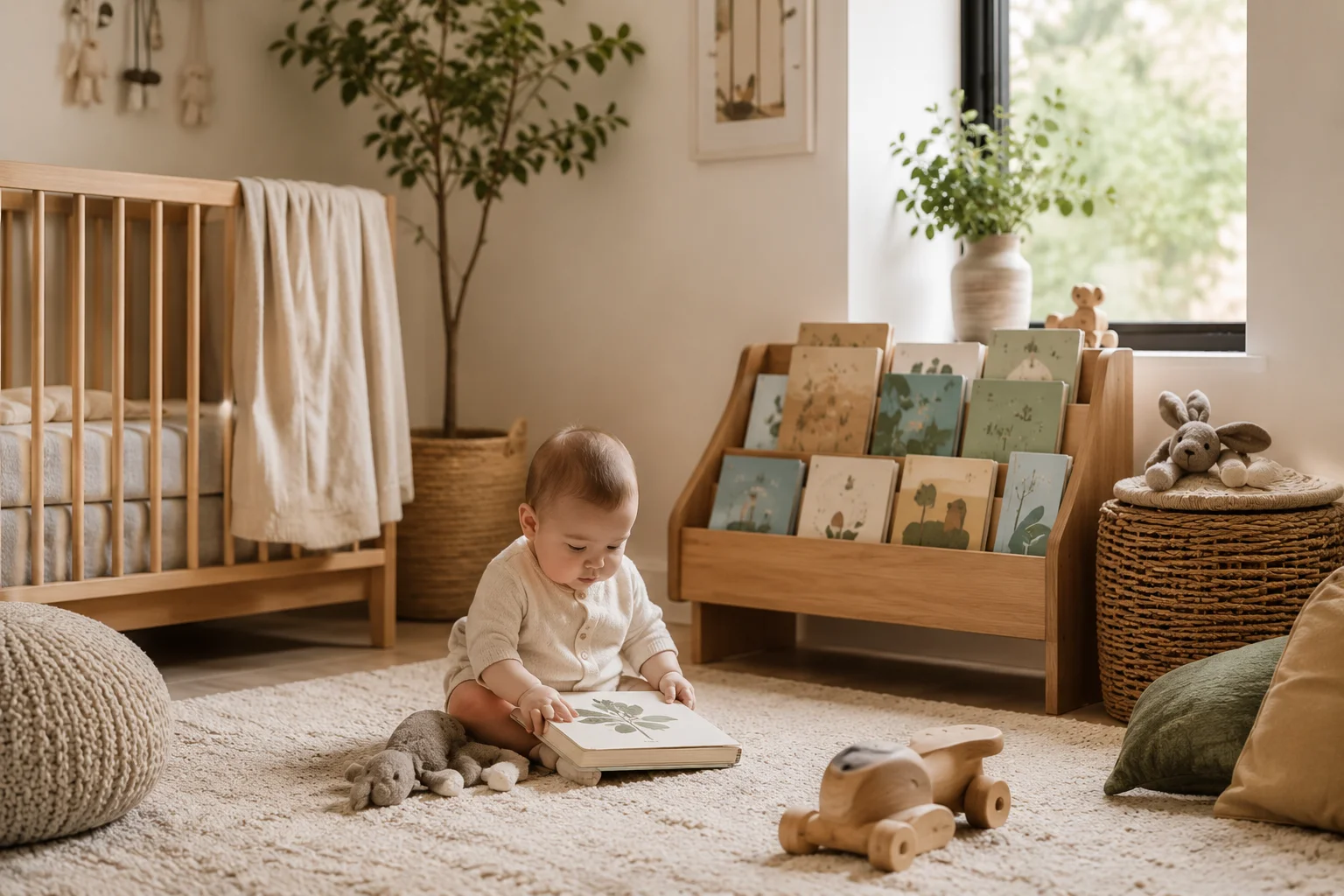
Babies increasingly reach, grab, mouth, pat, and turn. Sturdy board books become practical because the book is also a physical object to explore.
Later in the first year
Many babies can choose between two books, touch pictures, imitate sounds, and attend for a few minutes. HealthyChildren.org specifically recommends naming what a baby is looking at and asking simple questions even before the baby can answer verbally, because this introduces the rhythm of back-and-forth conversation.3
You do not need a special “educational” book
For babies, the adult interaction matters enormously. Choose books you can comfortably hold, repeat, point to, sing, and talk about. A beautiful but fragile book that nobody wants the baby to touch is often less useful than a sturdy board book that can survive daily handling.
Repetition is a feature
Babies often want the same pages or books repeatedly. That is not a problem. Familiarity makes it easier to anticipate what comes next and participate. You can use the same book differently across development: first by naming pictures, later by asking “Where is the dog?” and eventually by letting the toddler finish a repeated phrase.
What if the baby will not sit still?
They do not have to. Shared reading with babies is naturally short and physical. You can read while the baby is on your lap, lying nearby, or moving between you and the book. Stop before the experience becomes a struggle.
Does reading from birth guarantee later reading success?
No responsible evidence supports a guarantee. Early shared reading is one supportive part of a child’s language and literacy environment. Development also depends on many other experiences, individual differences, instruction, health, and context.
The useful reason to begin at birth is simpler: there is no need to wait, and pediatric guidance views shared reading as a developmentally appropriate way to create language-rich, responsive interaction from the start.12
A simple newborn reading routine
Pick one sturdy book. Hold the baby close. Read or talk for as long as they are comfortable. Point to one or two pictures. Respond to a look or sound. Close the book while the experience is still pleasant. Repeat tomorrow.
That is enough.
A keepsake for the baby shelf
If you want a book designed to stay in the family, Stattner offers personalized printed storybooks. For very young babies, the parent’s voice and interaction still matter more than expecting the child to follow the whole story.
Browse personalized books →For a baby, a short book and a responsive adult are already enough to begin.
References
Selected research and evidence-informed sources. Each source below links to the publisher, DOI, PubMed, or authoritative organization used for verification.
- Klass, P., et al. (2024). Literacy Promotion: An Essential Component of Primary Care Pediatric Practice: Policy Statement. Pediatrics, 154(6), e2024069090. DOI: 10.1542/peds.2024-069090. Verify source ↗
- Klass, P., Mendelsohn, A. L., Hutton, J. S., et al. (2024). Literacy Promotion: An Essential Component of Primary Care Pediatric Practice: Technical Report. Pediatrics, 154(6), e2024069091. DOI: 10.1542/peds.2024-069091. Verify source ↗
- American Academy of Pediatrics / HealthyChildren.org. How to Share Books With Your Baby (updated 2024). Encourages following the baby’s lead, naming pictures, asking questions, and accepting repeated favorites. Verify source ↗
When Should You Start Reading to a Baby?: FAQ
Can you really read to a newborn?
Yes. Newborn reading can be extremely simple and brief. Hold the baby close, read or talk about a few pictures, and stop when they have had enough.
What kind of books are best for newborns?
Simple, sturdy books that are easy to hold and share work well. Faces, clear pictures, rhythm, rhyme, and high-contrast images can all give you something easy to talk about.
How long should I read to a baby?
There is no required session length. A baby may attend for only a few minutes. Follow their cues instead of trying to finish the book.
What if my baby chews the book or turns pages randomly?
That is normal exploration. Board books are useful because babies can handle them physically while learning that books are part of everyday life.
Does reading to a baby teach them to read early?
Shared reading supports a language-rich early environment, but it does not guarantee early independent reading. The goal in infancy is interaction and familiarity with books, not formal reading instruction.