Personalized Spy Books for Kids: Mission-Ready Buyer Guide
Shopping for a personalized spy book? Compare mystery level, child likeness, age fit, scary content, preview quality and gift value before ordering.

Spy stories are built for personalization because the reader naturally wants to be the person who receives the secret mission. They are also easy to mishandle: too much threat becomes scary, while a plot with no real puzzle can feel like costume play rather than a mystery.
This guide separates verified product facts from research evidence and buyer advice. It does not use invented search-volume numbers, fabricated studies or guaranteed developmental claims.
Personalized Spy Books for Kids: Mission-Ready Buyer Guide A good personalized spy book gives the child a solvable mission, age-appropriate suspense, clear stakes without graphic danger, and enough clues for the reader to participate. Check the full preview so the “secret agent” concept stays fun rather than frightening.
What makes a spy story work for children?
The child needs a goal, clues and a payoff. Codes, maps, hidden objects, missing treasures and suspicious-but-silly characters usually create more replay value than a story built around weapons or danger. Younger readers benefit from concrete clues they can point to or remember.
Stattner’s current catalog lists “The Secret Spy” in the Let’s Go! collection, giving spy-intent traffic a direct route into an existing personalized adventure.1
Personalization should strengthen the mission
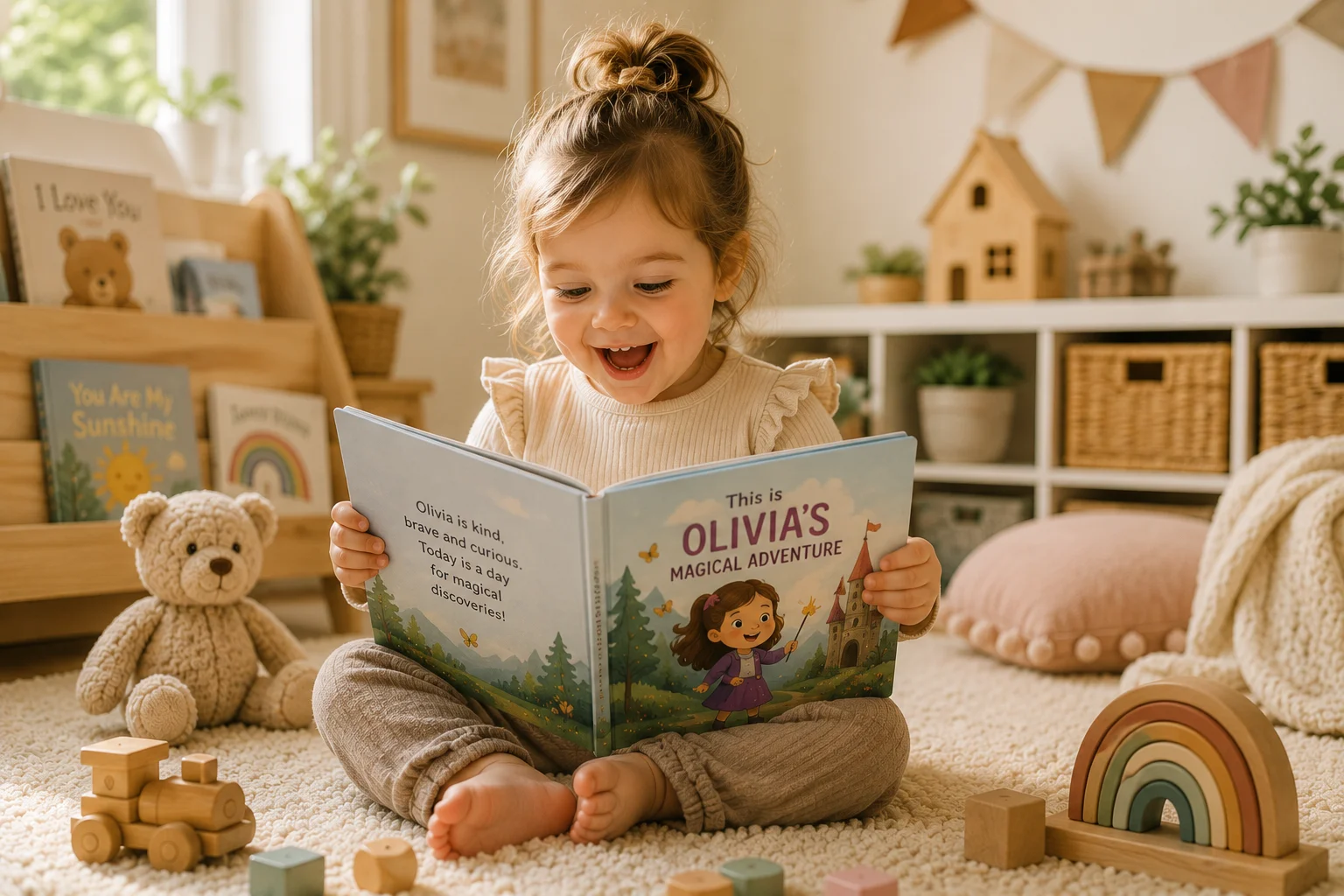
Name and likeness are useful when they make the child feel like the agent receiving the assignment. The effect is less convincing if only the cover is personalized while the interior hero looks generic or changes noticeably from scene to scene.
Personalization studies have found increased self-referencing and spontaneous speech in some young-child reading contexts, but the research base is limited and does not establish that a spy theme is educationally superior.2
Check suspense level before you buy
Read the full story or preview if available. Ask whether there are dark rooms, villains, kidnapping, weapons or threatening language that would bother this particular child. “Spy” can mean playful detective work or intense danger; the title alone does not tell you which.
Turn the book into an interactive read without adding screens
Pause before each reveal and ask, “What would you check next?” or “Which clue matters?” That kind of reciprocal interaction is consistent with the broader evidence around shared picture-book reading, where adult participation and responsive conversation matter.3
Gift occasions for a spy fan
Birthdays, holidays, a reading reward, travel and “first chapter-book” transitions can all work. The strongest reason is still simple: the child already loves mysteries, codes or make-believe missions. Search intent should follow the child, not the other way around.
Give your young detective the secret mission
Browse Stattner’s Let’s Go! collection, look for The Secret Spy, personalize the child and preview the mission before ordering the printed book.
Browse personalized storybooks →A personalized spy story succeeds when the child feels clever inside the mystery, not merely dressed for it.
References
Selected research and first-party sources used for factual claims.
- Stattner. All Personalized Storybooks. Current collection page used to verify live Stattner themes including The Brave Knight, The Secret Spy, Soccer Hero Within and Goodnight, Little Hero. Verify source ↗
- Kucirkova, N., Messer, D., & Sheehy, K. (2014). The effects of personalisation on young children’s spontaneous speech during shared book reading. Journal of Pragmatics, 71, 45–55. Study of 35 young children found more spontaneous speech and self-referencing in personalized than non-personalized book sections. Verify source ↗
- Dowdall, N., Melendez-Torres, G. J., Murray, L., Gardner, F., Hartford, L., & Cooper, P. J. (2020). Shared Picture Book Reading Interventions for Child Language Development: A Systematic Review and Meta-Analysis. Child Development, 91(2), e383–e399. Meta-analysis of 19 randomized controlled trials (2,594 children aged 1–6) found small effects on expressive and receptive language and a large effect on caregiver book-sharing competence. Verify source ↗
Personalized Spy Books for Kids: Mission-Ready Buyer Guide: FAQ
Does Stattner have a personalized spy book?
Yes. The current Stattner catalog lists “The Secret Spy” in the Let’s Go! collection.
Are spy books too scary for young children?
Some can be. Check the full story for threat level, villains, dark scenes and weapons rather than relying on the word “spy.”
What makes a good spy story for kids?
A clear mission, discoverable clues, age-appropriate suspense and a satisfying solution.
Can I use a spy book for interactive reading?
Yes. Pause at clues and ask the child what they notice or predict; the goal is conversation rather than testing.
Why should I preview a personalized spy book?
A preview lets you check both story intensity and whether the child’s personalized character stays recognizable across the mission.