
Fairy books compete on beauty, which means the cover can do too much of the selling. Before ordering a personalized version, check whether the child actually has a role in the magical world. A fairy or cloud kingdom should create a story problem, discovery or relationship—not just a sequence of pretty scenes.
The buyer test is simple: would the book still be enjoyable if the first surprise of seeing the child’s name and face were no longer new? If not, the product is relying too heavily on novelty.
Personalized Fairy Books For Kids. Choose a fairy or light-fantasy book with an active child hero, understandable magic, age-fit tension and a full preview. Stattner’s The Cloud Kingdom is a current fantasy match, though it is not explicitly marketed as a fairy title.
Fairy atmosphere is not the same as fairy story
Flowers, wings, clouds and sparkles can create a mood without creating a narrative. Ask what the child wants, what changes, and why the magical world matters. If those answers are unclear in the preview, personalization may be carrying too much of the product.
Stattner currently lists The Cloud Kingdom, a personalized fantasy in which a young explorer follows a rainbow staircase into the clouds. It is a fantasy match for fairy-story shoppers rather than a title explicitly marketed as a fairy book.1
Personalization should change the reading experience, not just the cover
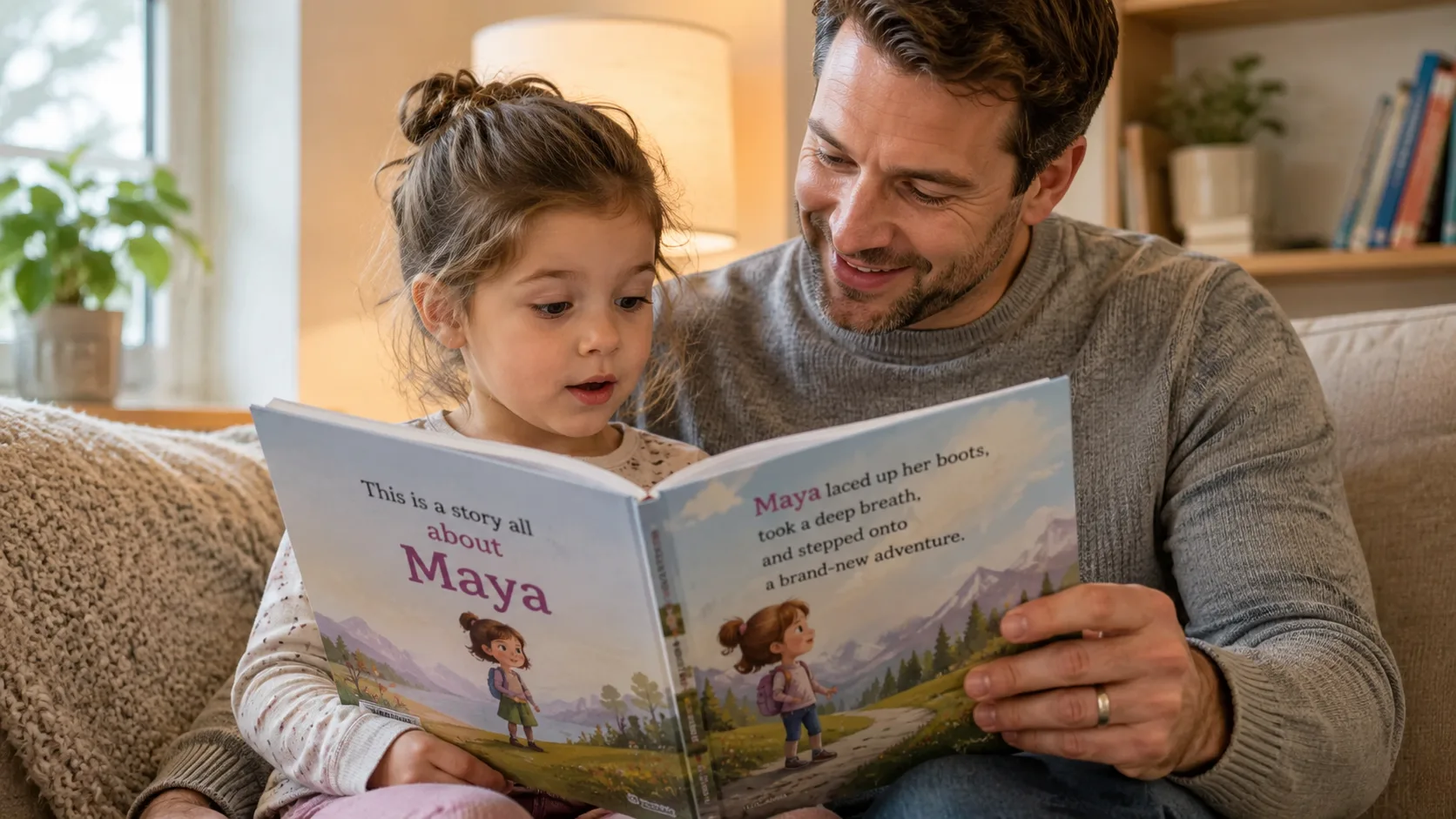
Small studies of personalized picture books suggest that personalization can affect how children respond during shared reading. One study of 35 preschool children reported more spontaneous speech and self-referencing in personalized sections than in non-personalized sections.3 That is promising evidence, but it does not mean every personalized book automatically improves language, confidence or reading skill.
The hero enters the magical world for a reason and affects what happens.
Why it matters: Fantasy becomes a narrative rather than a backdrop.
Rules are simple enough that the child can follow cause and effect.
Why it matters: Wonder stays accessible.
The child is recognizable across magical transformations and settings.
Why it matters: The central “that’s me” promise survives scene changes.
Use “fairy” as an interest clue, not an age label
Fairy fantasy can be written for toddlers, early readers or much older children. The keyword alone does not tell you sentence length, conflict level or emotional intensity. Preview the actual book and judge it for the child in front of you.
Use the full preview as a quality-control step
Stattner describes a workflow in which families choose a story, personalize the child and preview the finished result before ordering.2 Use that preview actively: check spelling, face consistency, hands and clothing, page order, text density and whether the plot remains coherent from spread to spread.
| Check | Good sign | Watch out for |
|---|---|---|
| Fantasy role | Good Magic changes the story and child has agency. | Pretty environments replace plot. |
| Tone | Good Wonder and curiosity fit the child. | Dark magic or peril is stronger than expected. |
| Product labeling | Good Seller clearly explains what the book actually is. | A nearby fantasy title is presented as “fairy” when it is not. |
Keep the educational promise narrow and factual
The American Academy of Pediatrics supports shared reading from infancy and emphasizes developmentally appropriate, language-rich interaction around books.4 That supports reading together; it does not justify turning every themed personalized story into a claim about guaranteed learning, therapy or behavior change. The honest promise is a personal story, a shared reading moment and a physical keepsake.
The Cloud Kingdom
For a child who likes gentle magical worlds, compare Stattner’s current fantasy titles. The Cloud Kingdom is a close thematic match for fairy-story shoppers, and the full preview should decide whether it fits.
Browse personalized storybooks →A fairy book should leave the child remembering the magical choice they made, not only the glitter surrounding them.