Personalized Dance Books for Kids: A Buyer’s Guide for Little Dancers
Choose a personalized dance book by story quality, movement theme, recital tone, child likeness, age fit and preview-before-print options.


A dance book can be a strong personalized gift because the interest is easy to recognize: the child already twirls, practices, watches dance or talks about class. The conversion trap is assuming that every dancer wants the same “win the recital” story.
The more useful question is what does this child love about dance? The answer should guide the story you buy.
Personalized Dance Books for Kids. Look for a dance story that matches how the child actually enjoys movement—studio classes, recital excitement or dancing at home. Avoid products that turn confidence or performance improvement into guaranteed outcomes.
Choose the emotional angle before the dance style
Some children love performance. Others love movement, music, costumes, class friends or simply spinning around the living room. A good personalized dance book does not need to turn the child into a competition champion. It needs a premise that feels compatible with their real relationship to dance.
Stattner’s current The Magical Dance describes a young dancer exploring multiple joyful movements including twirl, stomp-and-clap, gentle sway, jump-and-bounce and ribbon dance.1 That makes the live story broader than a single ballet-recital plot.
Do not promise confidence as a product outcome
Storytelling can model persistence, courage and self-expression, but “this book will make your child confident on stage” is too strong. Shared reading has evidence behind it as a language-rich family interaction.2 Personalized-book research also suggests that self-relevant content can change children’s talk during reading.3 Neither result is a guarantee about dance performance.
Look for movement the child recognizes: twirling, jumping, clapping, rhythm or a stage moment.
Why it matters: Recognition makes the theme feel personal before the name even appears.
The plot should make room for effort, fun and expression—not only winning or perfection.
Why it matters: Many young dancers are motivated by play, not competition.
Check limbs, poses, clothing continuity and the child’s face across movement-heavy illustrations.
Why it matters: Dance art exposes visual inconsistencies quickly.
Check whether “personalized” means more than the cover
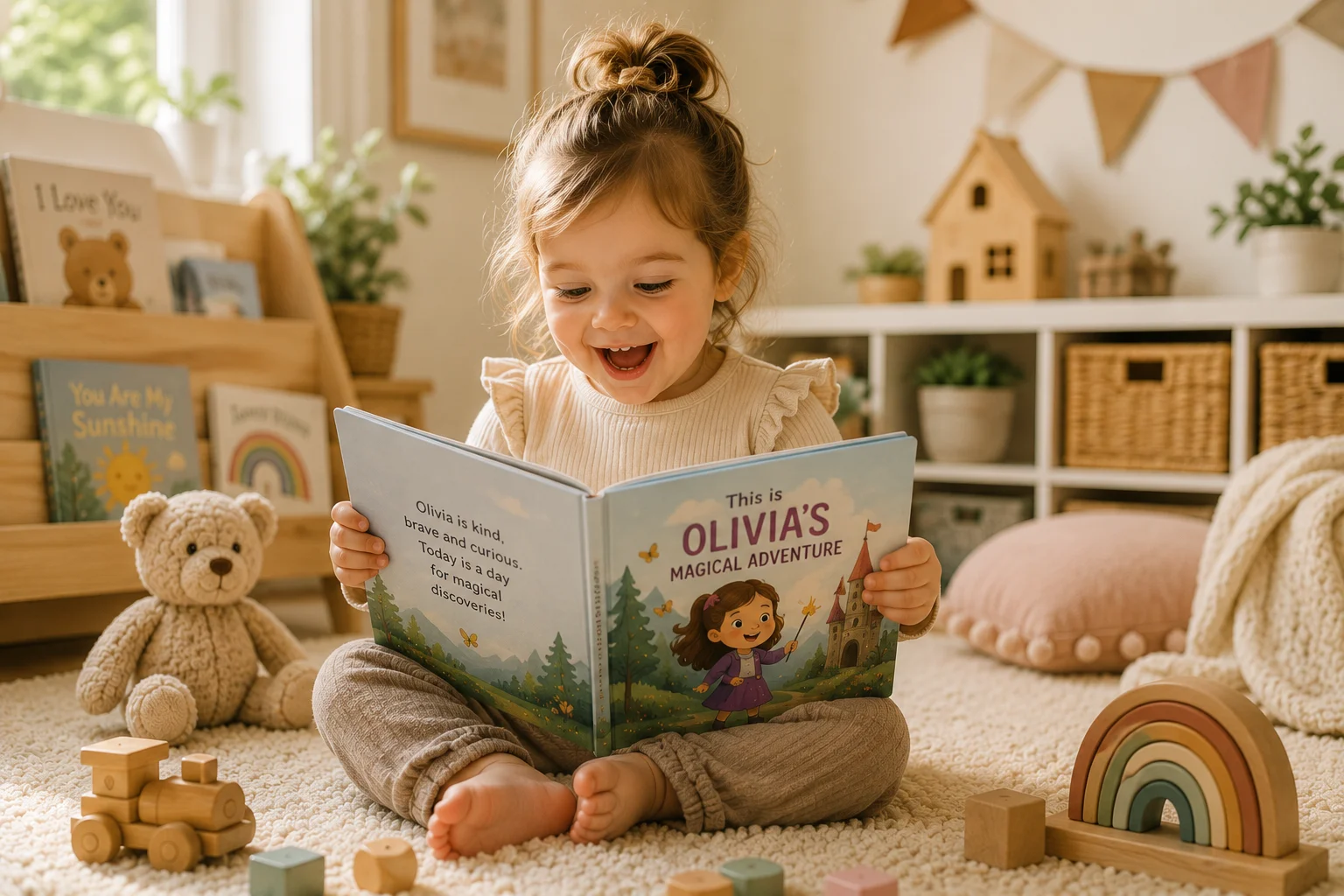
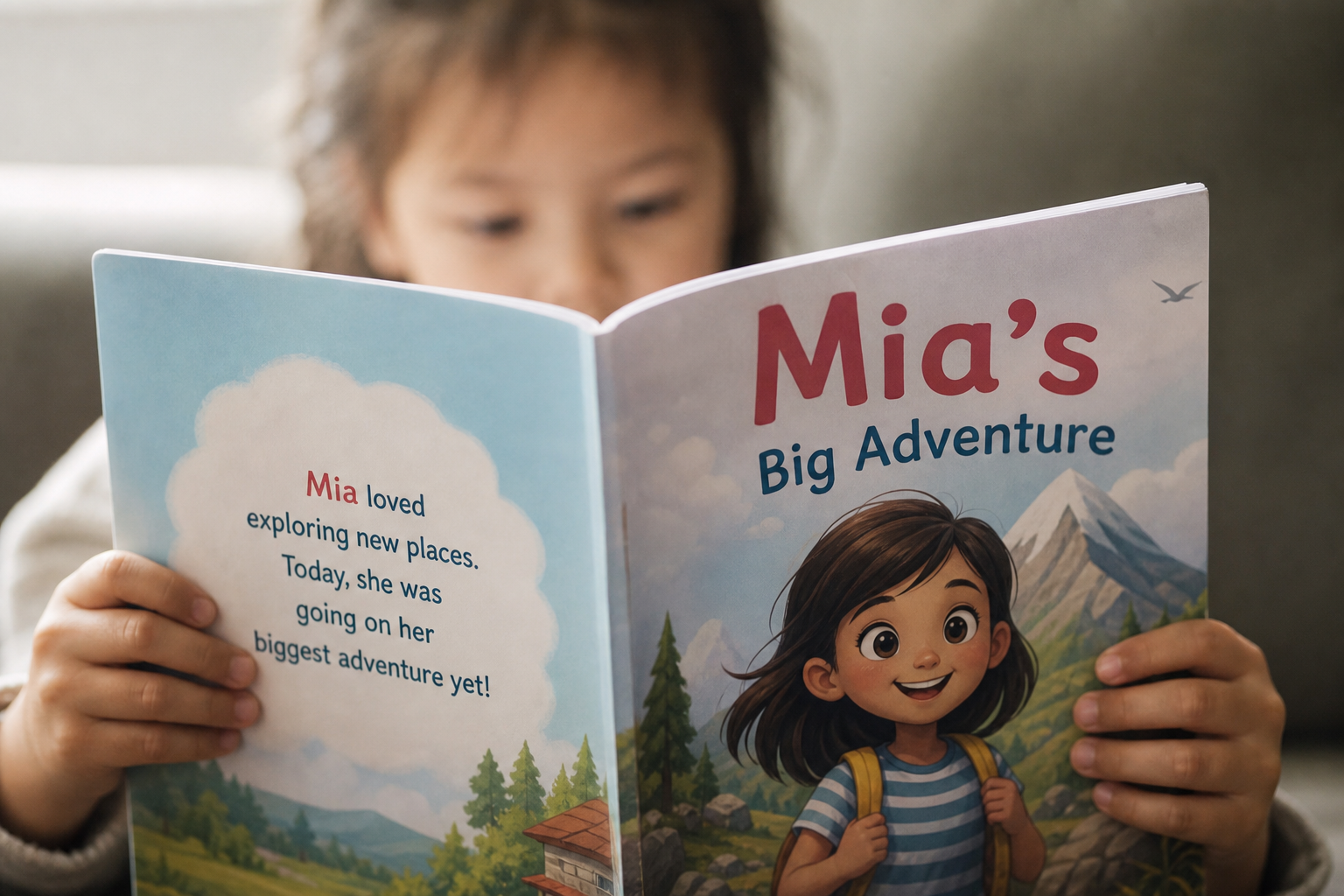
A name on the cover is a different product from a story where the child appears throughout. Read the product details and the exact preview. If the seller uses generated artwork, look especially closely at hands, feet, repeated costumes and facial consistency.
Plan around recitals and birthdays
Dance gifts are often tied to a date: recital weekend, birthday or first class. Personalized print products need enough time for preview and production. Use the live delivery estimate at checkout rather than relying on an old blog post or social-media promise.
| Check | Good sign | Watch out for |
|---|---|---|
| Theme | Good The plot reflects movement the child enjoys. | A generic princess story labeled “dance.” |
| Tone | Good Effort, expression and joy matter. | Winning is the only definition of success. |
| Artwork | Good Motion looks coherent across pages. | Anatomy or costume changes that break immersion. |
The Magical Dance
For a movement-first rather than competition-first story, Stattner currently lists The Magical Dance. Personalize the child, review every spread and order only when the preview feels coherent.
Browse personalized storybooks →A personalized dance book should feel like an invitation to move—not a report card on how well the child performs.
References
Selected research and first-party sources used for factual claims.
- Stattner. The Magical Dance. Current first-party product page for Stattner’s dance-themed personalized story. Verify source ↗
- American Academy of Pediatrics (2024). Literacy Promotion: An Essential Component of Primary Care Pediatric Practice: Policy Statement. AAP recommends shared reading beginning at birth and continuing at least through kindergarten, with developmentally appropriate, language-rich interaction. Verify source ↗
- Kucirkova, N., Messer, D., & Sheehy, K. (2014). The effects of personalisation on young children’s spontaneous speech during shared book reading. Journal of Pragmatics, 71, 45–55. Study of 35 preschool children found more spontaneous speech and self-referencing in personalized than non-personalized sections. Verify source ↗
Personalized Dance Books for Kids: A Buyer’s Guide for Little Dancers: FAQ
Is a personalized dance book only for ballet dancers?
No. Choose the story from the child’s real interest in movement; dance can include twirling, rhythm, creative movement and many styles.
Does Stattner have a dance-themed book?
Yes. The Magical Dance is currently listed in Stattner’s Things I Love collection.
Can a dance book reduce stage fright?
A story can normalize feelings and model coping, but it cannot guarantee a change in stage anxiety or performance.
What should I inspect in AI dance illustrations?
Check hands, feet, body position, face consistency and clothing continuity across movement-heavy scenes.
When should I order a recital gift?
Use the seller’s current production and shipping estimate and leave time to review the personalized preview before print.