
Parents often shop for confidence books when a child is facing a first day, a new challenge or a moment of self-doubt. Personalized stories can make the example feel close to home, but the safest promise is modest: a book can support conversation and rehearsal, not diagnose or treat a child.
For this guide, the standard is simple: separate what the product can genuinely offer from claims that sound impressive but are not supported. Stattner’s current catalog and personalization flow were checked against its live first-party pages.12
Personalized Confidence Books For Kids: Look for confidence stories that normalize uncertainty, show small brave actions and let the child succeed without pretending fear disappears. Use them as conversation tools and enjoyable stories—not as therapy or a guarantee of behavior change.
Good confidence stories include the wobble
A hero who is fearless from page one has little to teach about courage. More believable stories show hesitation, help, trying and progress. The child can still be the hero without being perfect.
Personalization can make self-reference more immediate
In a small study of 35 preschoolers, personalized sections produced more spontaneous speech and self-referencing than non-personalized sections.3 That makes personalized stories interesting for discussion, but the result should not be stretched into a claim that one book increases self-esteem or treats anxiety.
Shared reading can support warm conversation
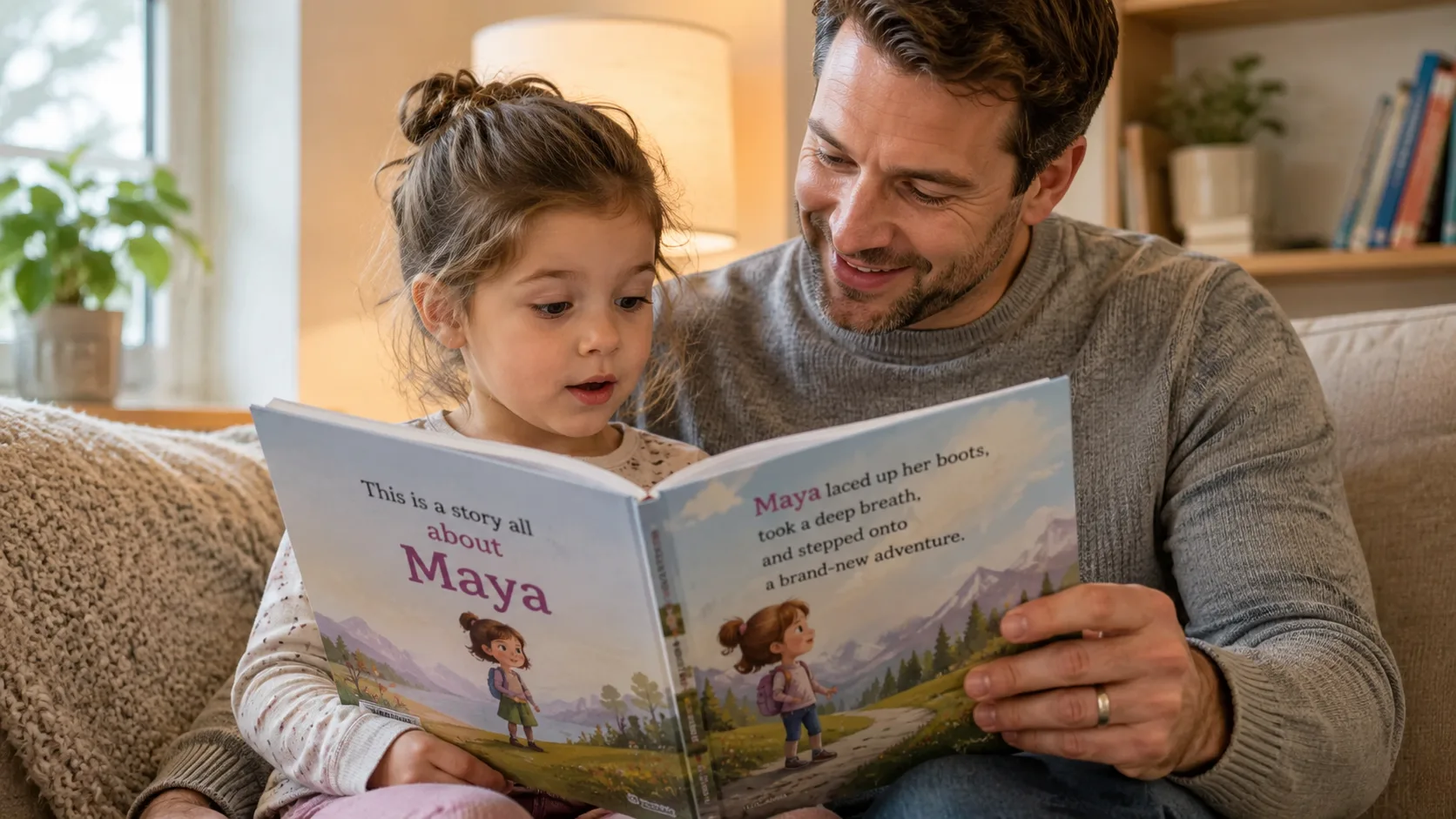
The AAP describes shared reading as a language-rich, relationship-building activity that also supports social-emotional development.4 Reading together gives an adult room to ask, “What would you do?” or “When have you felt like that?” The conversation may matter more than any motivational sentence printed in the book.
Choose a story matched to the actual challenge
A child nervous about bedtime needs a different story from a child preparing to try a sport, ride a horse or face a new social setting. Stattner’s current catalog includes titles such as Goodnight, Little Hero, The Courage Ride and The Courage of the Deep, which can fit different emotional tones without being labeled as treatment.1
A three-part buying check
Let the hero feel unsure before showing progress.
Why it matters: This is one of the fastest ways to separate a strong fit from a visually impressive but weaker book.
Confidence is more believable when courage has a specific action.
Why it matters: This is one of the fastest ways to separate a strong fit from a visually impressive but weaker book.
A story can support conversation but should not be sold as treatment.
Why it matters: This is one of the fastest ways to separate a strong fit from a visually impressive but weaker book.
Any learning, reading or confidence claim should be judged against the cited evidence. These buyer guides do not treat personalization as a guaranteed developmental outcome.
This article is general reading and gift guidance, not a diagnosis or treatment recommendation. A storybook can support family conversation, but persistent distress or functional difficulties may need appropriate professional support.
Choose a story that makes bravery specific
Browse Stattner’s current stories and pick a challenge that resembles the child’s interests or moment. Preview the full book before ordering.
Browse personalized storybooks →The best personalized book is not the one with the most customization. It is the one the child recognizes, understands and wants to open again.