Personalized Books for Siblings: One Book or Separate Gifts?
Buying personalized books for siblings? Compare one shared story vs separate child-centered books, fairness, age gaps, themes and gifting strategy.

Personalization creates a sibling question that ordinary books often avoid: if one child is the hero, what does the other child receive? The answer depends on whether the product supports multiple main characters, the children’s age gap and whether the gift is meant to be shared or individual.
This guide separates verified product facts from research evidence and buyer advice. It does not use invented search-volume numbers, fabricated studies or guaranteed developmental claims.
Personalized Books for Siblings: One Book or Separate Gifts? For siblings, first decide whether you want one shared story or one book per child. If the product centers one hero, separate books usually give cleaner personalization. If you choose one book, confirm that every sibling has a meaningful role rather than assuming multiple names automatically create a balanced story.
Shared story vs separate books: the real trade-off
One shared book can emphasize cooperation and reduce duplicate purchases. Separate books make it easier to match each child’s interests, reading level and appearance. Neither format is universally fairer.
If the children have a large age gap, separate books are often simpler because text length and theme can be tailored independently. If they are close in age and love the same activity, a shared story may feel natural—if the seller truly supports more than one central character.
Do not assume every personalized-book platform supports multiple children
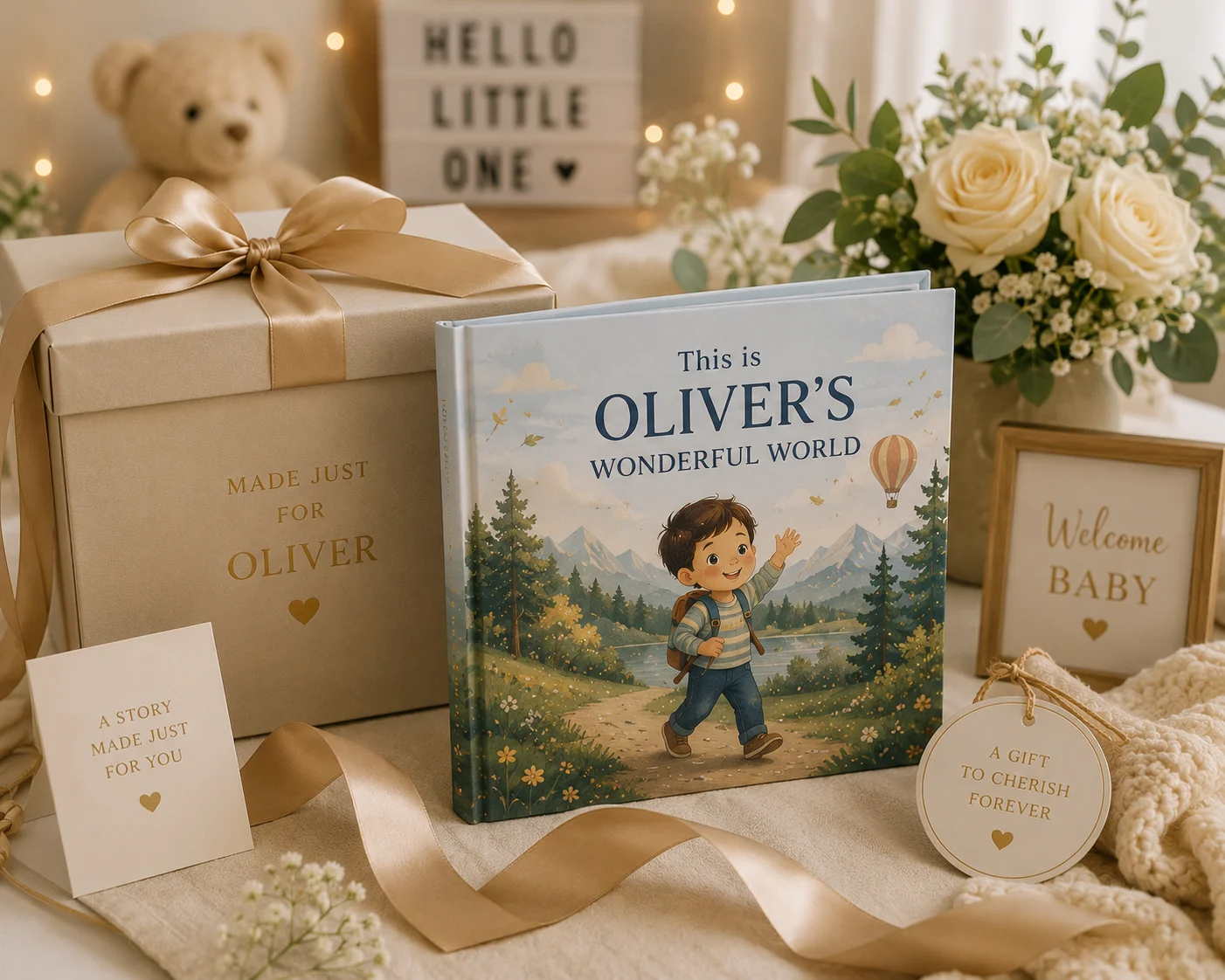
Check the live customization flow before promising a shared book. Some services center one main hero. Stattner describes its current books as stories where “a child” becomes the hero and its customization centers that child’s name and appearance.1
For a sibling household, that means the safest Stattner use case is an individual book built around each child, unless a current product explicitly shows otherwise.
Fair does not have to mean identical
One child might receive a soccer story while another chooses magic. Matching price and presentation can matter more than forcing both children into the same theme. The key is that each gift looks intentional rather than like one child’s book was the “real” choice and the other was added later.
What research says about the arrival of a new sibling
If this gift is connected to a new baby, avoid assuming the older child is automatically in crisis. A review of 30 studies found no overwhelming evidence that the transition to siblinghood produces consistent adjustment problems for most firstborn children; responses vary.2
That is useful for copywriting: do not sell a book by telling parents their older child is destined to be jealous. Frame the story as recognition, preparation or celebration rather than treatment.
A sibling-gift checklist
Decide shared vs separate, check whether multiple characters are actually supported, match each child’s age and interests, preview everything, and present the gifts at the same time if comparison is likely. If only one child has the milestone, explain why that child is receiving the special item.
Create a story around each child’s own interests
Browse Stattner’s story collections and choose an individual hero story for the sibling whose interests match the theme, then preview before ordering.
Browse personalized storybooks →Personalization feels fair when every child can see the thought behind the choice—not when every book looks exactly the same.
References
Selected research and first-party sources used for factual claims.
- Stattner. About Stattner / brand and product information. Stattner states that its printed storybooks personalize a child’s name and appearance, allow a complete preview before ordering, are printed in the USA, and are designed for bedtime, gifting and keepsake moments. Verify source ↗
- Volling, B. L. (2012). Family transitions following the birth of a sibling: an empirical review of changes in the firstborn’s adjustment. Psychological Bulletin. Review of 30 studies found the transition to siblinghood is not uniformly a developmental crisis; children’s adjustment patterns vary, so claims that every older child becomes jealous or distressed are too broad. Verify source ↗
Personalized Books for Siblings: One Book or Separate Gifts?: FAQ
Should siblings share one personalized book?
They can if the product genuinely supports multiple central characters and the children enjoy the same story. Otherwise, separate books are often easier to personalize well.
Do personalized books need to be identical for siblings?
No. Matching each child’s interests can feel more personal than giving two copies of the same story.
What if one sibling is much older?
Choose separate age-appropriate books or make the older sibling the reader of a shared story. Large age gaps make one-size-fits-all text harder.
Are older children always jealous when a new sibling arrives?
No. Research reviews show wide variation in adjustment; a “crisis” is not inevitable for every firstborn child.
Can I make one Stattner book with several children as equal heroes?
Stattner’s current public description centers one child as the hero. Check the live customization flow before assuming multi-child support.