
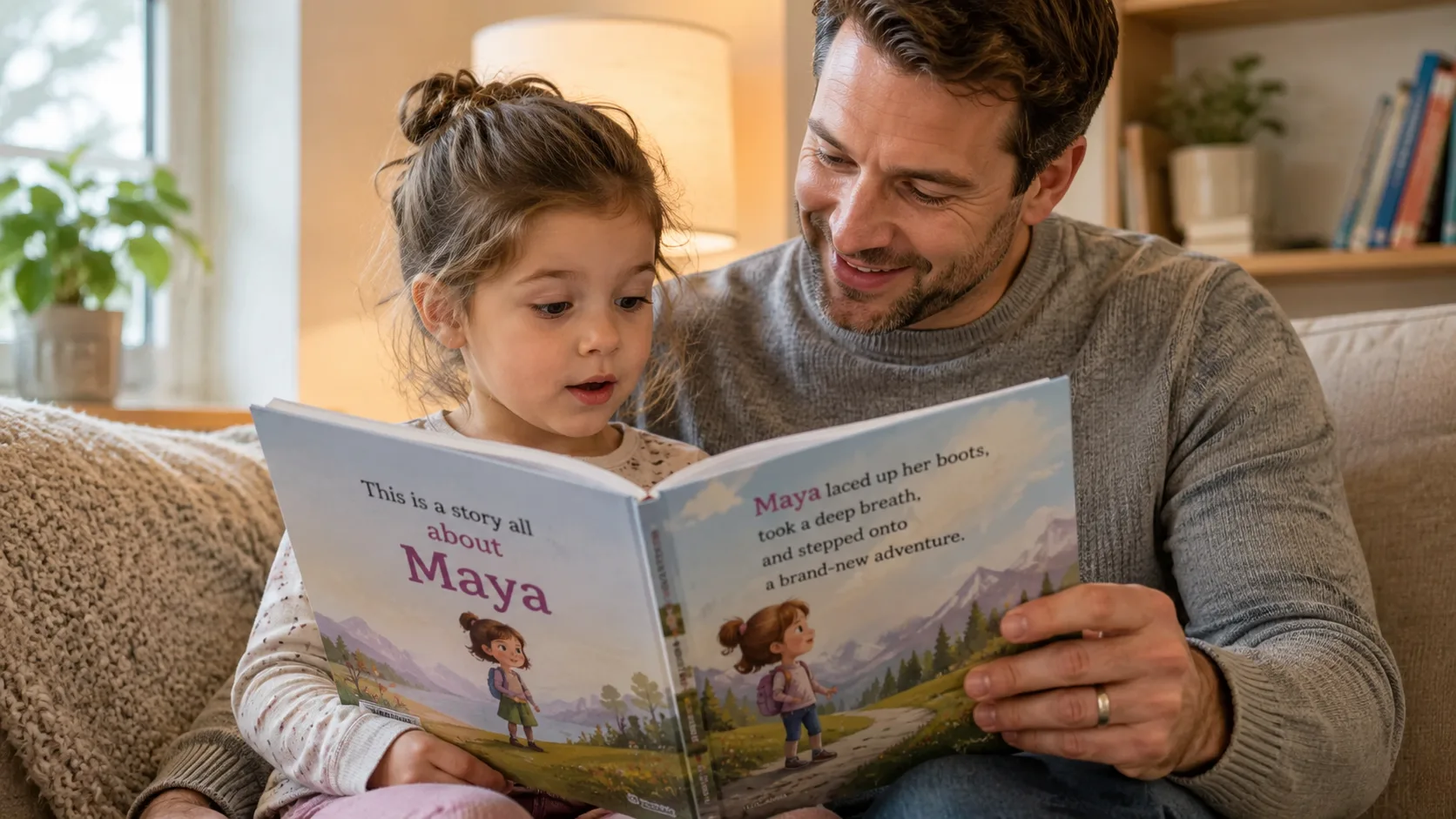
A personalized book for a three-, four- or five-year-old is usually read with an adult even when the child recognizes letters and familiar words. That means the best buying criteria are not “Can they read every line alone?” but “Can we enjoy this together, and will the child want it again?”
For this guide, the standard is simple: separate what the product can genuinely offer from claims that sound impressive but are not supported. Stattner’s current catalog and personalization flow were checked against its live first-party pages.12
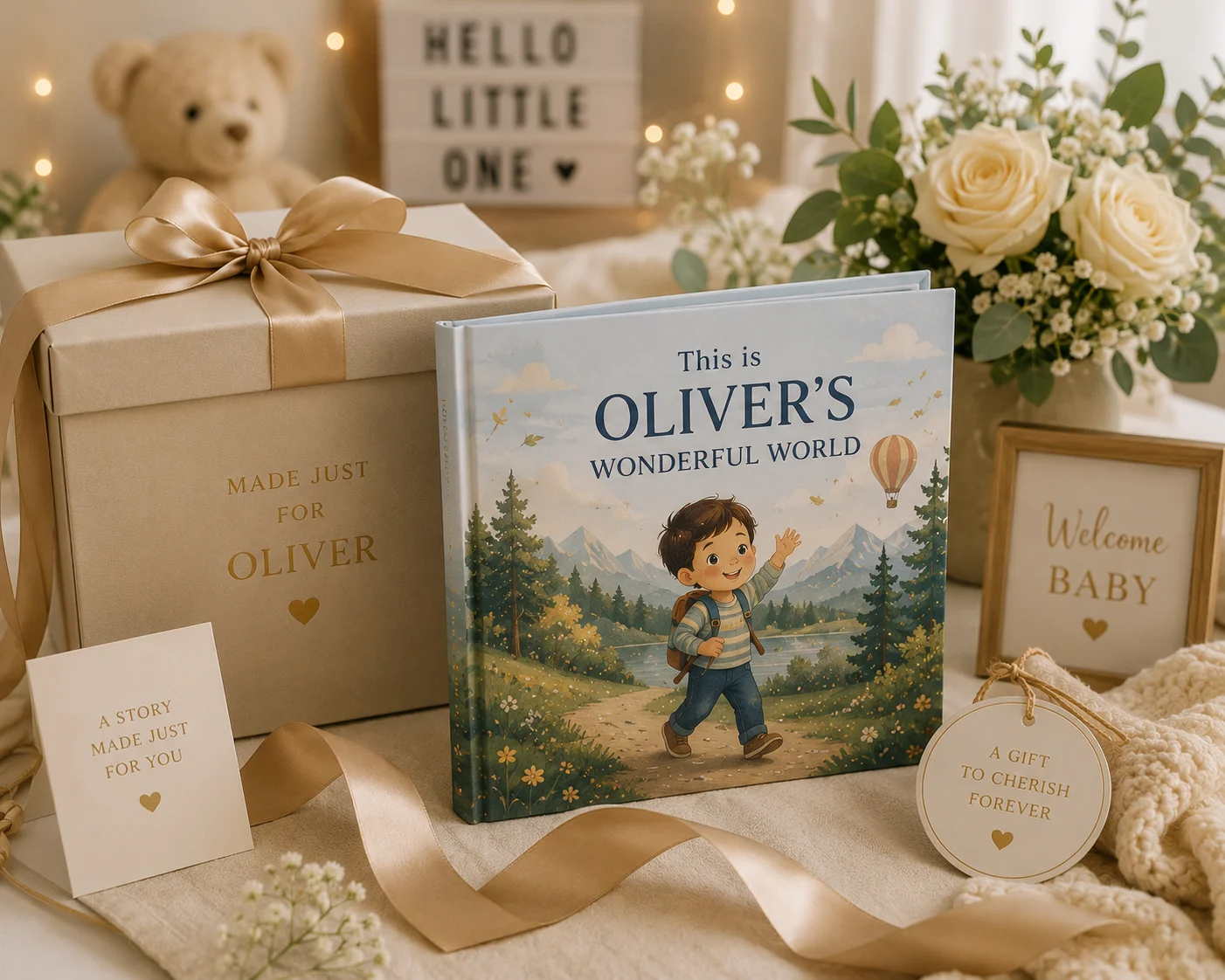
Personalized Books For Preschoolers: For preschoolers, look for a simple but complete plot, strong picture support, readable page density, a recognizable child hero and a tone that encourages conversation. Do not assume personalization alone makes a book developmentally appropriate.
Preschool books should be easy to follow without being empty
At ages three to five, many children can follow a genuine story arc while still relying heavily on pictures and adult read-aloud support. Keep an eye on sentence length, number of ideas per page and whether illustrations help explain what is happening.
Shared reading matters more than independent performance
The AAP recommends reading together beginning at birth and emphasizes developmentally appropriate, language-rich interaction around books.3 A preschool book does not fail because an adult reads most of the text; pointing, predicting, laughing and talking are part of the experience.
Personalization research is promising but small
One study of 35 preschool children found more spontaneous speech and self-referencing in personalized sections.4 Another study of 18 preschoolers found stronger knowledge of target words appearing in personalized sections at later tests.5 Those studies are too small to justify sweeping claims, but they support careful interest in personalization during shared reading.
Preview the book through a preschooler’s eyes
Stattner allows families to preview the complete personalized book before ordering.2 Read several pages aloud. Look at the picture before reading the text. Ask whether the child’s role is obvious, whether the conflict is understandable and whether anything is unnecessarily frightening or confusing.
A three-part buying check
Illustrations should carry meaning, not just decorate the text.
Why it matters: This is one of the fastest ways to separate a strong fit from a visually impressive but weaker book.
A complete story can still use short, clear page-level beats.
Why it matters: This is one of the fastest ways to separate a strong fit from a visually impressive but weaker book.
Choose a premise your child is likely to request again.
Why it matters: This is one of the fastest ways to separate a strong fit from a visually impressive but weaker book.
Any learning, reading or confidence claim should be judged against the cited evidence. These buyer guides do not treat personalization as a guaranteed developmental outcome.
Pick the story, then test the preview aloud
Stattner has multiple story worlds rather than one fixed preschool title. Choose by the child’s interests, then use the full preview to judge actual complexity and tone.
Browse personalized storybooks →The best personalized book is not the one with the most customization. It is the one the child recognizes, understands and wants to open again.