How to Build a Home Library for Kids on Any Budget
Book access matters, but that does not mean a family needs to buy hundreds of new hardcovers. A strong home library can be a small core of owned favorites plus a steady flow from libraries, swaps, gifts, and secondhand sources.

For years, researchers have known that children with more books at home often have stronger academic outcomes—but correlation leaves a difficult question: are books helping, or are book-filled homes simply different in many other ways? A major 2026 randomized trial adds unusually strong evidence.
A useful home library can be small. A 2026 five-year randomized trial in 60 high-poverty schools found that cumulative print-book access improved reading achievement, but it does not establish a magic number of books for every home. Focus on reachable favorites, variety, rotation, and library borrowing.
The 2026 randomized trial worth knowing about
Geoffrey Borman and Hyunwoo Yang ran a five-year school-level randomized controlled trial in 60 high-poverty public elementary schools. Students in 30 treatment schools received four book distributions across five years, averaging about seven books per distribution; 30 control schools did not receive the program.1
The researchers reported a statistically significant intention-to-treat effect on reading achievement of d = 0.100, with a larger d = 0.207 advantage among students who completed the full five-year program.1
That is meaningful evidence that cumulative access to print books can contribute to literacy achievement in this context. It is not a formula saying “buy 28 books and your child’s score will rise by X.” The intervention happened in high-poverty schools, over years, with curated distributions and sustained exposure.
What a home library is really for
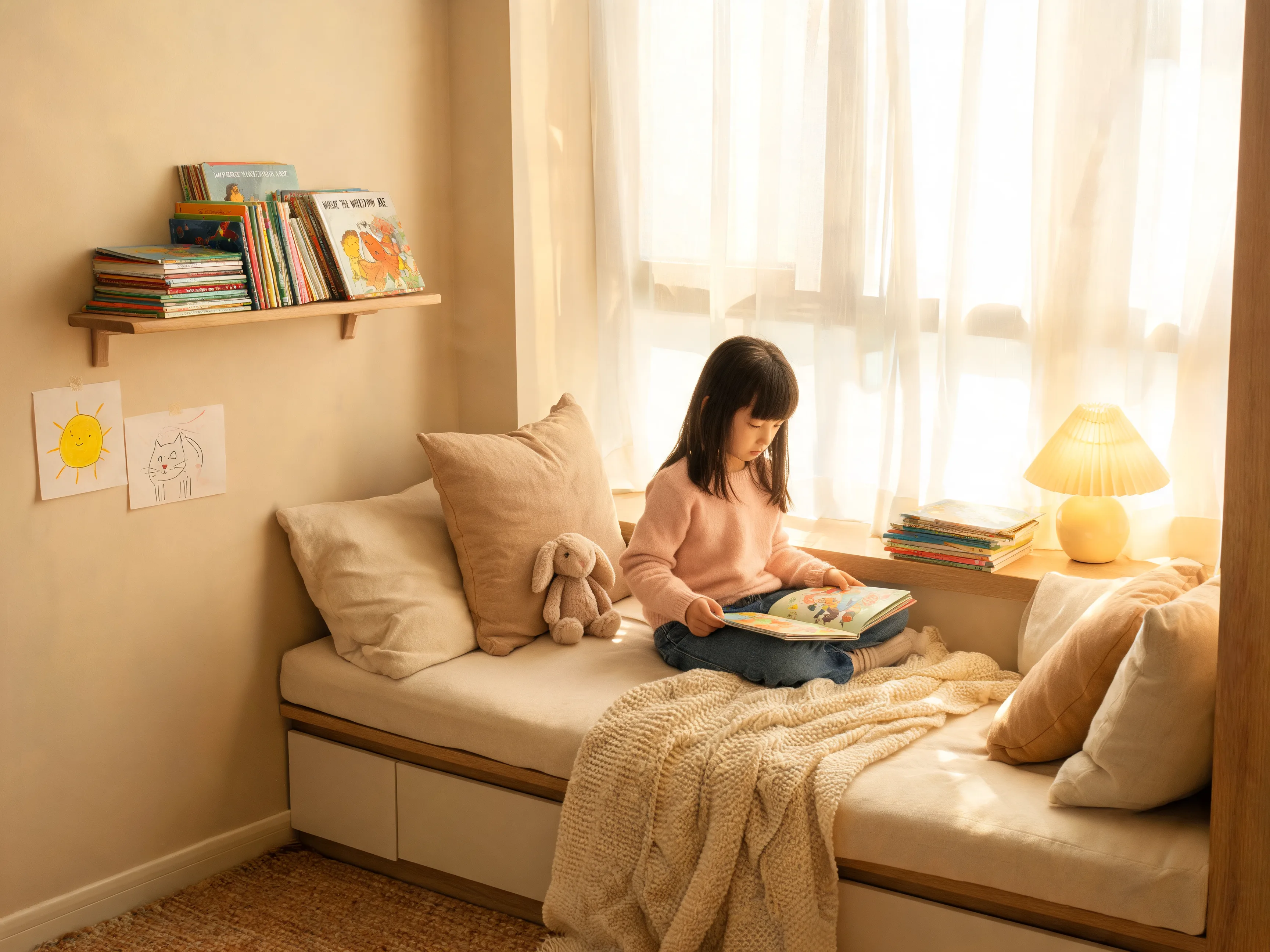
A home library reduces friction. The child can see a book, reach it, reopen it, abandon it, return later, and read without waiting for an adult to organize a trip or search a device.
HealthyChildren.org recommends keeping books around because accessible books are easier for children to pick up, even for a few minutes.2
The National Literacy Trust’s 2026 survey also shows the broader motivation challenge: only 36.1% of UK children and young people aged 5–18 said they enjoyed reading in their free time, even after a small year-on-year improvement.3 Access alone does not create enjoyment, but a child cannot choose a book that is never available.
You do not need hundreds of books
Start with ten to twenty books that cover different jobs:
- two or three favorites worth rereading;
- one or two funny or very easy books;
- nonfiction tied to current interests;
- a longer read-aloud;
- books that reflect the child’s family or culture;
- one or two books slightly outside current interests;
- library books that rotate regularly.
The exact number is not evidence-based. The point is functional variety.
Buy less, rotate more
A shelf can feel new without being large. Store some books away and rotate them every few weeks. Keep current favorites accessible. Borrow a themed stack from the library when an interest appears—dinosaurs this month, oceans next month.
Rotation also helps you discover which books actually deserve permanent space. A book requested fifteen times may be worth owning. A beautiful book nobody touches can stay borrowed.
Put books where reading starts
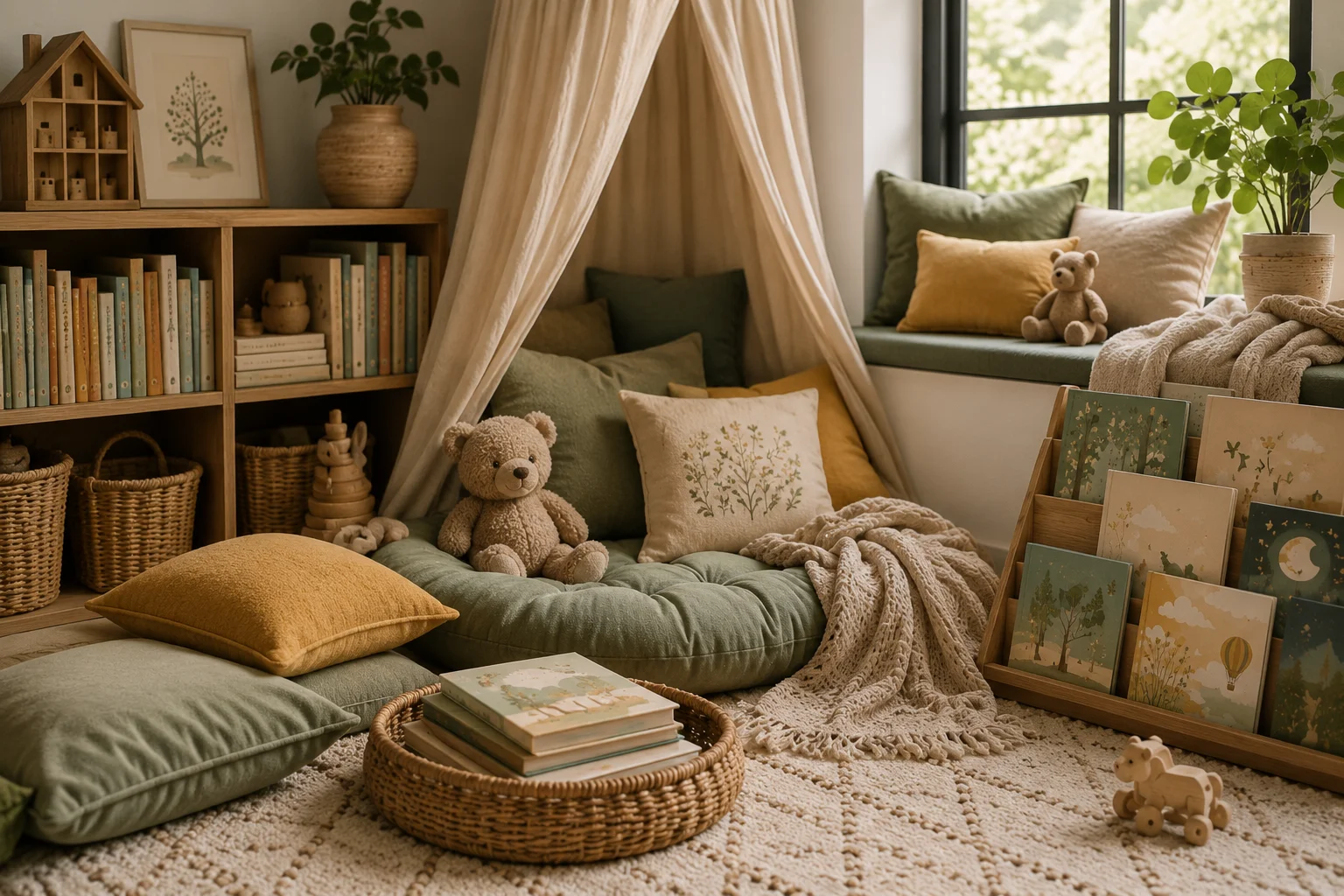
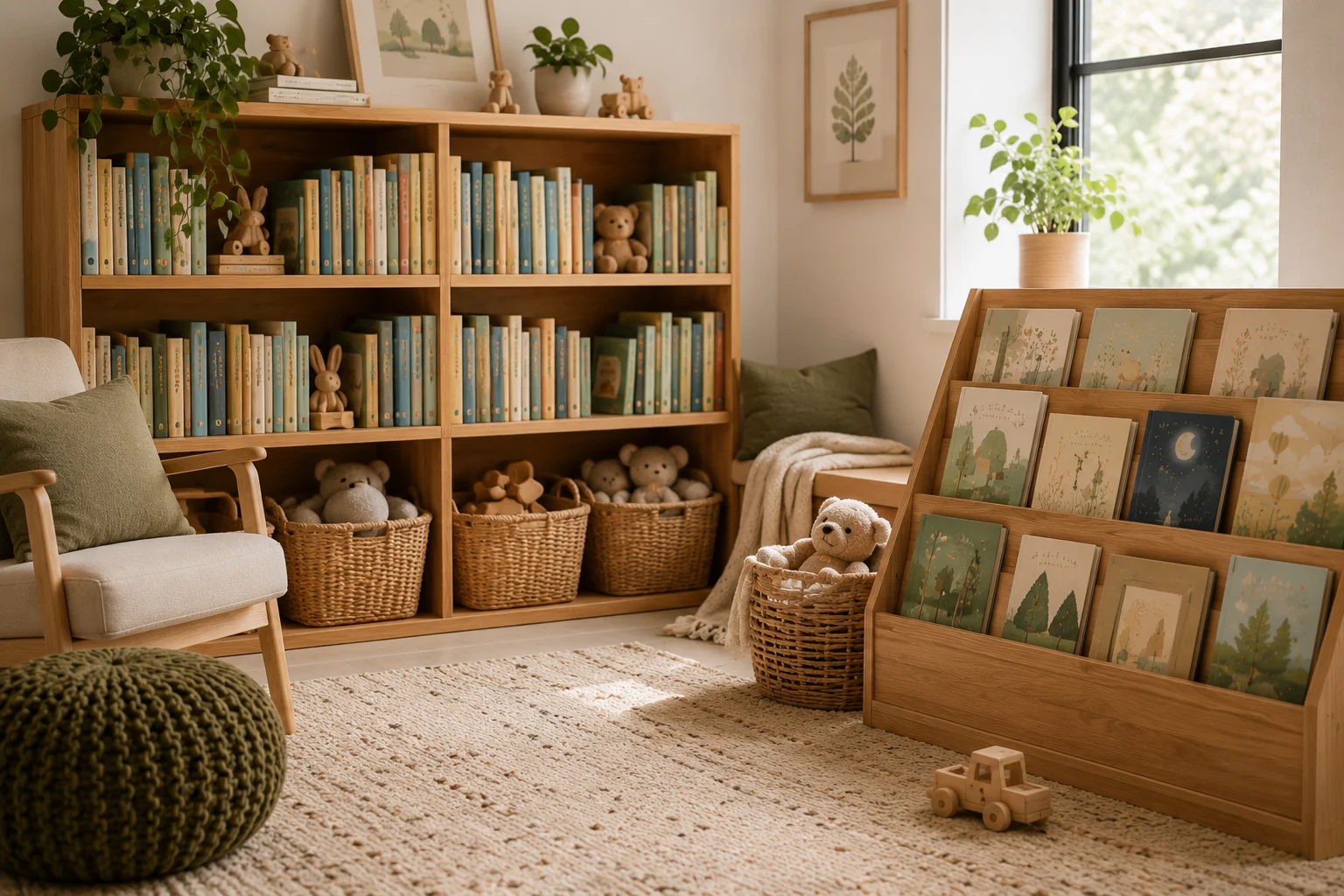
One low shelf in the living room may outperform a perfect library hidden in a bedroom. Keep a basket near the couch, a few board books near the play area, and a bedtime stack where the routine happens.
Young children need to be able to reach and handle books without asking permission every time.
Use the library as part of the home library
Owning and borrowing solve different problems. Owned books provide instant familiarity and repetition. Libraries provide discovery and variety at low cost.
A practical rule is: borrow widely, buy selectively. Purchase the books that become true favorites, meaningful gifts, or long-term read-alouds.
Make selection visible
Face a few covers outward instead of packing every spine tightly. Put three options in a basket. Let the child choose what gets displayed. A library that invites action is more useful than one optimized only for storage.
What about personalized books?
Personalized books can fill a specific role in a home library: the high-salience keepsake or “this is mine” book. They should not replace variety. A child still benefits from stories about people unlike themselves, nonfiction, humor, classics, new authors, and library discovery.
Bottom line
Build for access, choice, and rereading. You do not need a giant shelf or a large monthly budget. A small group of loved books, made easy to reach and refreshed through a library or swaps, can create a much richer reading environment than an expensive collection nobody opens.
Give one shelf spot to a book made for them
A personalized story can be one high-salience keepsake inside a varied home library. Stattner creates printed books customized with a child’s name and appearance and lets families preview before ordering.
Create a personalized book →A small shelf that gets used is more valuable than a large shelf nobody touches.
References
Selected research and evidence-informed sources. Each source below links to the publisher, DOI, PubMed, or authoritative organization used for verification.
- Borman, G. D., & Yang, H. (2026). Cumulative access to print books improves literacy achievement: Evidence from a five-year randomized trial in high-poverty schools. Proceedings of the National Academy of Sciences, 123(17), e2521416123. DOI: 10.1073/pnas.2521416123. Verify source ↗
- Razdan, S. / American Academy of Pediatrics, HealthyChildren.org. 10 Tips to Help Your Child Fall in Love with Reading (updated 2023). Includes keeping books accessible and continuing to read together after children begin reading independently. Verify source ↗
- National Literacy Trust. (2026). Children and young people’s reading in 2026. Annual Literacy Survey report based on 125,375 children and young people aged 5–18 in the UK. Verify source ↗
How to Build a Home Library for Kids on Any Budget: FAQ
How many books should a child have at home?
There is no evidence-based magic number that every family needs. Focus on a reachable mix of favorites, interest-based books, read-alouds, and rotating library books.
Do I need to buy a lot of books?
No. Libraries, swaps, gifts, and secondhand books can provide variety. Buy selectively when a borrowed book becomes a repeated favorite or a meaningful keepsake.
Does having books at home actually improve reading?
A 2026 randomized school trial provides causal evidence that cumulative access to print books can improve reading achievement in the population studied. It should not be converted into a simple “more books always equals higher scores” rule for every household.
Where should I put children’s books?
Put at least some books where the child can see and reach them easily. A low shelf or basket near the places your family already spends time reduces the friction of starting.
Should all home-library books match my child’s current interests?
No. Interest is a strong entry point, but variety still matters. Keep favorites while adding different genres, cultures, topics, and levels over time.