
How to Get Your Kid to Read Instead of Watching Screens
You don't beat screens by banning them. You beat them by making reading easier to start and more fun to finish. Here's how.
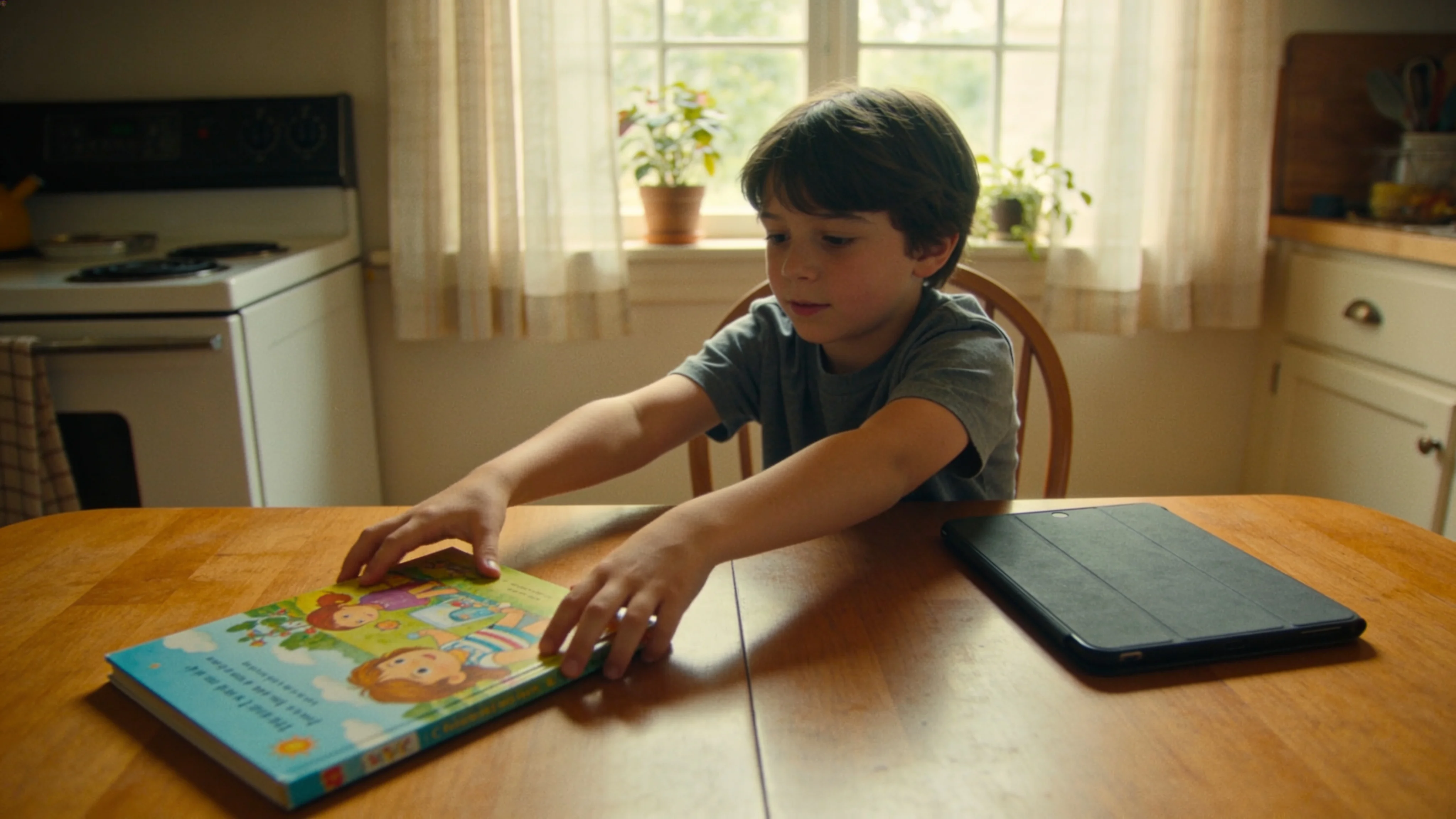
It's the standoff in a lot of living rooms: a perfectly good book sits on the shelf while your child reaches, again, for the tablet. You suggest reading. You get a groan. And it's tempting to conclude your kid just doesn't like books. But that's not quite what's happening. Reading and screens aren't competing on a level field—and once you understand why screens win so easily, you can stop fighting willpower battles and start tilting the field back toward books.
The good news: the solution isn't a total screen ban (which usually backfires) or a lecture about reading being good for you. It's a set of small, practical changes that make reading easier to start and more rewarding to do—so it can actually compete. Let's break it down.
Why screens win (it's not laziness)
Picture the choice from your child's point of view. A screen offers entertainment that is instant and almost effortless: tap, and the reward arrives immediately, perfectly tuned to keep them watching. A book asks for something different: effort up front—decoding words, building the picture in your head, getting a few pages in—before the payoff of getting lost in a story arrives. Faced with "fun right now for zero effort" versus "fun in a few minutes if you work for it," choosing the screen isn't a character flaw. It's a completely predictable decision.
This is why willpower-based approaches ("just choose the book!") rarely work, and why guilt doesn't help. Your child isn't failing a test of virtue; they're picking the easier of two options, the way almost anyone would. The job, then, isn't to scold the choice—it's to change the math: lower the effort reading requires, and raise how good it feels.
The mistake most parents make
The instinctive fix is prohibition: confiscate the devices, set hard bans, make screens the enemy. It feels decisive, but it tends to backfire for two reasons.
Bans trigger resistance
Take away a freedom and kids push back to reclaim it—often wanting the banned screen more. The fight becomes about control, not reading. (More on why pressure backfires.)
It frames reading as the punishment
"No screens until you read" teaches that screens are the prize and reading is the chore you suffer to earn it—the exact opposite of the association you want.
None of this means screens should be unlimited. Reasonable limits matter. But limits work with a second move, not instead of it: making reading genuinely appealing so it can hold its own. Restriction alone just creates a vacuum; restriction plus appeal fills it with books.
How to make reading compete
Two goals run through everything below: lower the friction of starting a book, and raise the appeal of finishing one.
-
Make starting effortless
Keep tempting books everywhere a kid lands—couch, car, bathroom, bedside. Offer short, funny, high-interest titles, not intimidating tomes. Drop the after-reading quiz. The easier it is to begin, the more often they will.
-
Make the book worth it
Follow their obsessions, lean into humor, and use binge-able series so one book pulls them into the next. Interest and laughter are what make a book compete with a screen's instant payoff. (See what actually motivates kids to read.)
-
Create screen-free pockets—not bans
Carve out small, consistent windows where a book is simply the easy default: the half hour before bed, the car ride, the wait at a restaurant. You're not banning screens; you're creating moments where reading naturally wins.
-
Be the model
Kids copy what they see. If your child mostly watches you scroll, that's the habit they learn. Let them catch you reading your own book—your behavior is louder than your advice.
-
Make screens an ally, not only an enemy
Audiobooks on a car ride, an ebook on the tablet, or a show that sparks interest in the book it's based on can all funnel a kid toward reading. Used well, the screen becomes a doorway rather than a dead end.
-
Make them the hero
One reason screens grip kids is that they feel personal and immersive. A book where your child is the star—and the jokes are about them—borrows some of that same pull, giving them a reason to choose the book on their own.
Giving reading a fair fight
When you stop trying to out-discipline the screen and start making reading easier and more fun, the standoff eases. And the books that compete best with a glowing rectangle are the ones that feel as personal and entertaining as what's on it—funny, fast, and unmistakably theirs.
As fun as the tablet—starring your child
The Stattner personalized prank book gives a reluctant reader the two things a screen offers and most books don't: it's genuinely funny, and it's all about them. Your child is the hero of their own hilarious story—which makes reaching for the book, instead of the tablet, an easy choice to make on their own.
Explore the personalized prank book →So the next time the tablet wins, skip the guilt and the ban. Put a short, funny book within arm's reach, carve out a quiet pocket of the day, pick up your own book where they can see you—and make the choice between screen and story a little fairer. You don't have to defeat screens. You just have to give reading a real chance to compete.
Frequently asked questions
How do I get my child to read instead of watching TV or screens?
Make reading easier to start and more rewarding to do: keep tempting books within reach, offer short, funny, high-interest titles, drop quizzes and pressure, create screen-free pockets of the day where a book is the easy default, and let your child see you reading. The goal is to help reading compete with screens, not to win by force.
Should I ban screens to get my kid to read?
Outright bans tend to backfire. They can trigger resistance and frame reading as the punishment and screens as the reward—exactly the wrong association. Reasonable limits combined with making reading genuinely appealing work better than prohibition alone.
Why does my child prefer screens to books?
Screens offer instant, low-effort entertainment, while reading asks for more effort before the payoff arrives. Choosing the easy, immediate option isn't a character flaw—it's predictable. The fix is to lower the effort reading requires and raise how rewarding it feels, so the comparison becomes fairer.
How much screen time is too much?
There's no single number that fits every family. What matters most is balance—whether screens are crowding out sleep, movement, time with people, and reading. Many families set consistent limits and screen-free times (like meals and the hour before bed) and adjust based on their child. For age-specific guidance, your pediatrician or a body like the American Academy of Pediatrics is a good reference.
Do audiobooks and ebooks count as reading?
Audiobooks build vocabulary, comprehension, and a love of story, and ebooks are simply books on a screen. Both can be valuable, especially for reluctant readers. They work best alongside print reading rather than as a complete replacement, but they absolutely count as engaging with books.
References & further reading
- Common Sense Media. The Common Sense Census: Media Use by Tweens and Teens (and Media Use by Kids Age Zero to Eight). Common Sense Media reports.
- Scholastic. Kids & Family Reading Report. (Tracks frequency of reading for fun and how it changes with age.)
- Sullivan, A., & Brown, M. (2015). Reading for pleasure and progress in vocabulary and mathematics. British Educational Research Journal, 41(6), 971–991.
- Hidi, S., & Renninger, K. A. (2006). The four-phase model of interest development. Educational Psychologist, 41(2), 111–127.
- American Academy of Pediatrics — guidance on children's media use (for age-appropriate screen-time recommendations).
Editorial note: sources are cited at a general level to support the points discussed. Verify each citation and confirm it supports the specific claim before publishing. This article is educational and is not a substitute for advice from a pediatrician, teacher, or reading specialist.