Coding Books for Kids: When a Personalized Story Beats Another How-To Manual
Compare coding books for kids by purpose: instruction, creative computing or personalized story. Learn what to expect before choosing a young-coder gift.
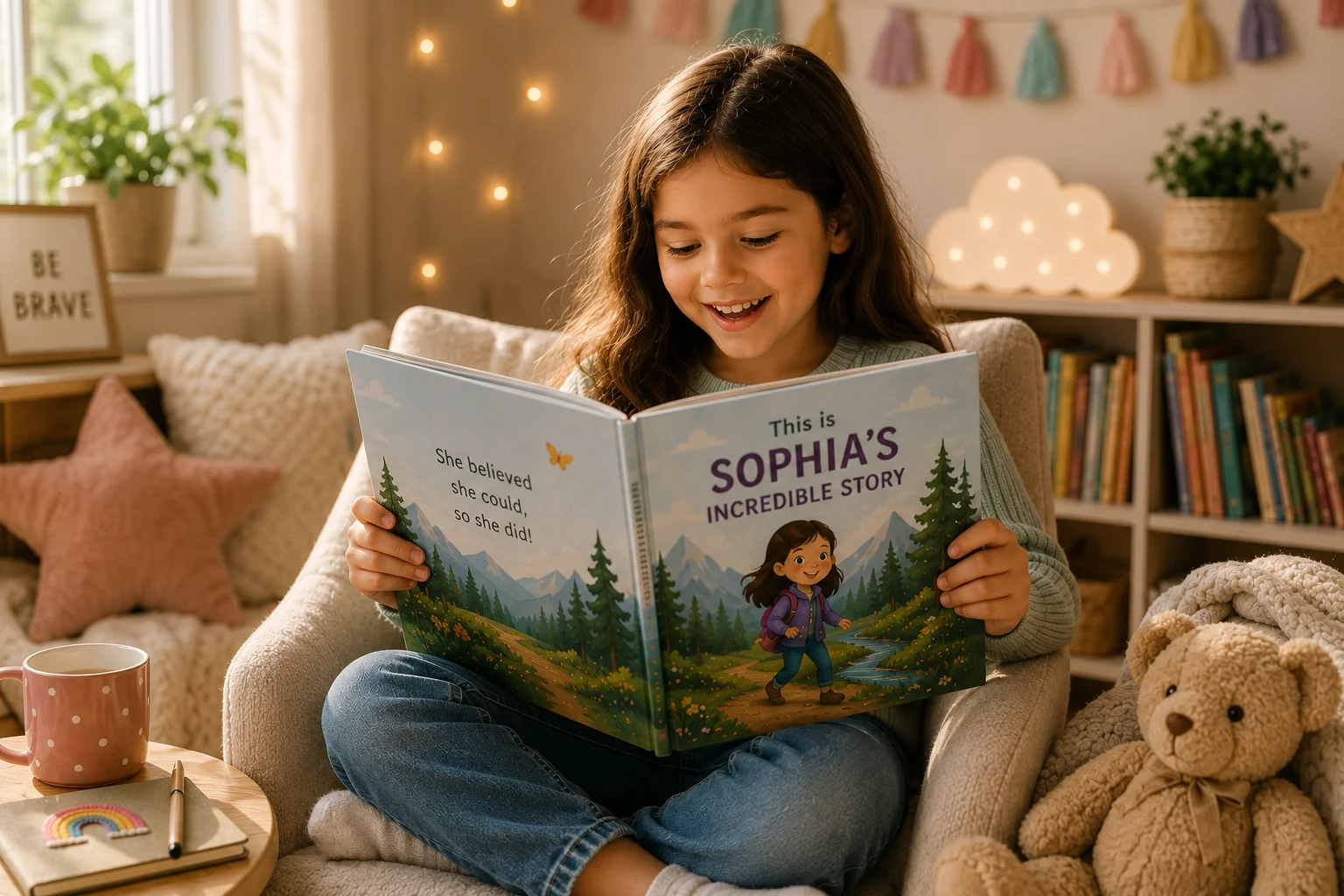
Parents searching “coding books for kids” are often looking for two completely different things. Some want a step-by-step programming resource. Others want a gift for a child who already identifies as “the coder” in the family. Mixing those intents produces disappointing purchases.
Before checkout, answer one question: should the child learn code from this book, or feel represented by the story?
Coding Books for Kids. Decide whether you need instruction or inspiration. A coding manual should teach code; a personalized coding story should build a narrative around a tech-loving child. Stattner’s Junior Moon Coder belongs to the second category.
Instruction and story are different products
A coding manual should contain accurate, testable instructions and exercises. A storybook can use coding as a theme, metaphor or plot device. A story can inspire curiosity, but it should not be marketed as a substitute for actually programming.
Stattner’s current Junior Moon Coder is a fictional personalized adventure about a young coder facing a glitching moon and strange behavior in the sky.1 That is a narrative gift, not a programming textbook.
Use real creative-coding tools for actual practice
Scratch, maintained by the Lifelong Kindergarten group at the MIT Media Lab, lets children create interactive stories, games and animations. Its parent information says Scratch is primarily designed for ages 8–16, while people outside that range also use it.2 If a child wants to code, pair story inspiration with an age-appropriate hands-on tool.
Do not oversell STEM outcomes
A personalized coding story cannot guarantee computational thinking, school performance or future career interest. It can reflect an existing interest and create a shared-reading moment. Personalized-book research suggests self-relevant content can prompt more speech and self-referencing in young children.3
Choose when the goal is following code examples and building real projects.
Why it matters: Accuracy and version relevance are essential.
Choose a tool such as Scratch when the child is ready to make interactive projects.
Why it matters: Learning comes from creating, testing and revising.
Choose when the gift goal is “this story sees you as a coder.”
Why it matters: The value is narrative and emotional, not technical instruction.
Check the age mismatch risk
A young child can love robots, computers and “coding” long before they are ready for a text-heavy programming manual. Conversely, an older child who already codes may find an overly simple story babyish. Read the preview and match sentence complexity to the actual reader.
Keep technology details timeless where possible
Programming books can age quickly when they depend on a specific software version. Fiction can avoid that problem by focusing on debugging, patterns, curiosity and problem-solving without teaching obsolete syntax. If the book does show actual code, verify it.
| Check | Good sign | Watch out for |
|---|---|---|
| Goal | Good You know whether the book should teach, inspire or personalize. | Expecting a storybook to teach programming syntax. |
| Age | Good Vocabulary matches the child’s reading/listening level. | Buying by “STEM” label alone. |
| Tech claims | Good Any real code or software instructions are current and testable. | Invented technical explanations presented as fact. |
Junior Moon Coder
For a child who already loves tech identity more than step-by-step instruction, Stattner currently offers Junior Moon Coder. Preview the story first, then pair it with real creative coding if the child wants to build something.
Browse personalized storybooks →A coding gift works best when it knows whether the child needs a manual, a tool—or a story that says “you belong here.”
References
Selected research and first-party sources used for factual claims.
- Stattner. Junior Moon Coder. Current first-party product page for Stattner’s coding-themed personalized story. Verify source ↗
- MIT Media Lab Scratch Team. Scratch: For Parents. Scratch is primarily designed for ages 8–16 and lets children program interactive stories, games, and animations. Verify source ↗
- Kucirkova, N., Messer, D., & Sheehy, K. (2014). The effects of personalisation on young children’s spontaneous speech during shared book reading. Journal of Pragmatics, 71, 45–55. Study of 35 preschool children found more spontaneous speech and self-referencing in personalized than non-personalized sections. Verify source ↗
Coding Books for Kids: When a Personalized Story Beats Another How-To Manual: FAQ
Is a personalized coding book a coding course?
No. A personalized story can celebrate coding themes, but it does not replace hands-on programming instruction.
Does Stattner have a coding-themed book?
Yes. Junior Moon Coder is currently listed in Stattner’s Let’s Go collection.
What age is Scratch for?
Scratch says it is primarily designed for ages 8–16, although people of many ages use it.
What should I buy for a child who wants to actually learn coding?
Choose an age-appropriate instructional resource or creative-coding tool; use a storybook as inspiration rather than technical instruction.
Can a coding story improve STEM skills?
A story can support interest and conversation, but it cannot guarantee coding skill, school performance or future STEM outcomes.