Ancient Egypt Books for Kids: How to Choose a Story Without Teaching Myths as Facts
Choose an Ancient Egypt book for kids by story quality, historical framing, age fit, personalization, preview quality and trustworthy supporting sources.
Pyramids, hieroglyphs, tombs and pharaohs naturally attract young readers. The risk is that the strongest visual hooks—mummies, treasure and curses—can turn a real civilization into a fantasy theme with little historical grounding.
A high-quality Ancient Egypt book can be adventurous and still make it obvious which parts are story and which parts are history.
Ancient Egypt Books for Kids. Choose a story that clearly separates fictional adventure from historical facts. For learning, pair the book with museum or educational sources. Stattner’s current catalog includes Mysteries of Egypt as the personalized adventure option.
Start by choosing fiction, nonfiction or a hybrid
A nonfiction book should prioritize accuracy and sources. A fictional adventure can invent characters and mysteries, but it should not present invented claims as historical facts. Hybrid books need the clearest labeling because children may not know where the boundary sits.
Stattner currently lists Mysteries of Egypt in its Worlds to Explore collection.1 Treat it as a personalized adventure story and use separate sources when you want to verify historical details.
Use museum sources to fact-check the exciting parts
The British Museum’s Ancient Egypt learning materials cover life and death in the Nile Valley, the Rosetta Stone, mummification, gods and goddesses and the afterlife.2 Its student resources are designed around actual collection objects and are a better fact-checking base than generic “ancient mystery” claims.
Avoid curse-heavy history
A tomb can be mysterious without claiming that every tomb was cursed. A mummy can appear without turning ancient Egyptians into horror props. Good history writing shows that real people lived, worked, worshipped, wrote and built communities—not only that they died and were buried.
The adventure is clearly presented as a story.
Why it matters: Invented events are phrased as historical fact.
The story uses accurate high-level context such as the Nile, hieroglyphs or monuments.
Why it matters: Random symbols and costumes with no explanation.
Mystery stays exciting without graphic death imagery for young readers.
Why it matters: Shock value drives the whole book.
Personalization can make history feel closer—without making it “about” the child
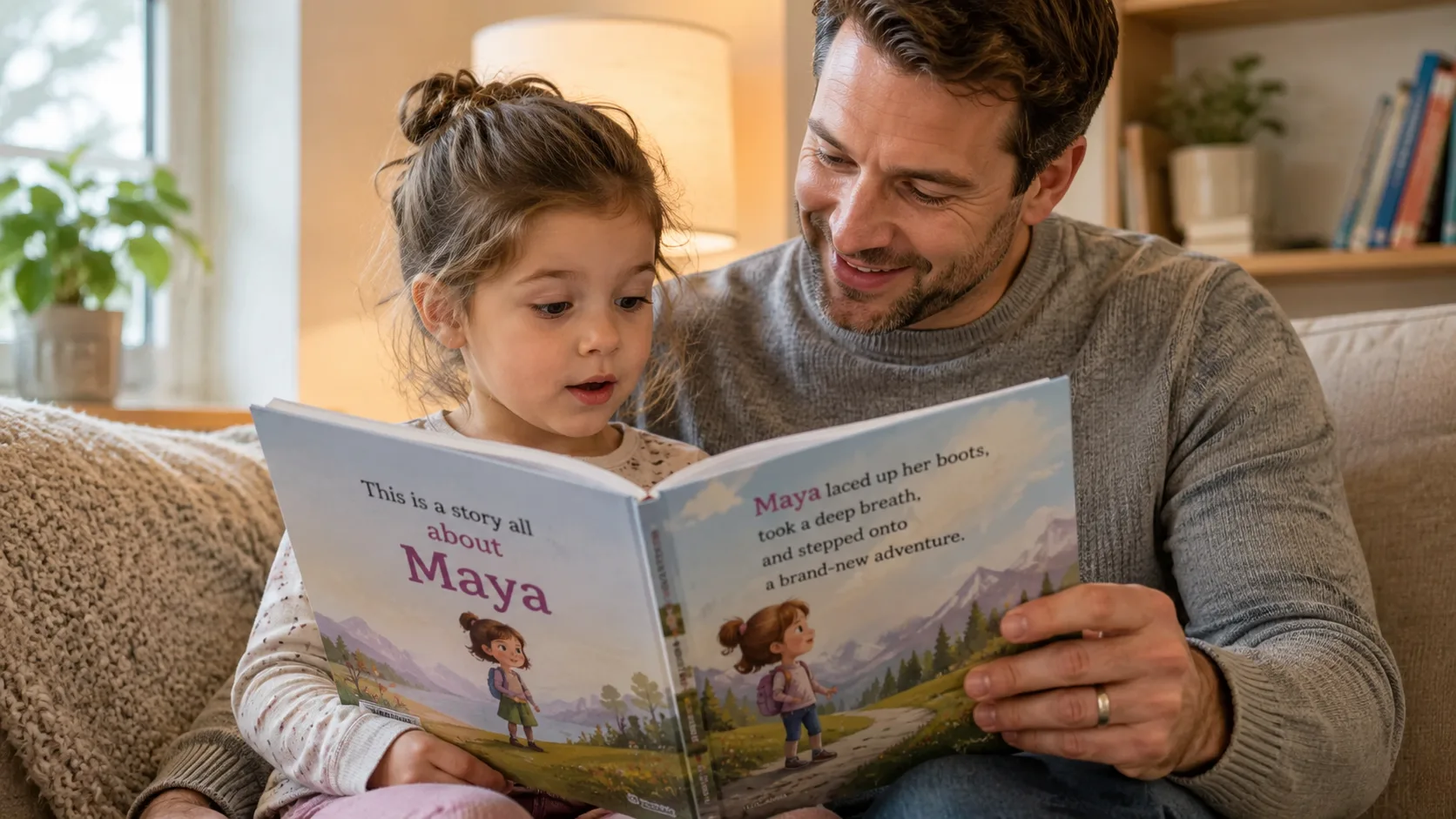
A personalized explorer can make the setting approachable. Personalized-book research suggests self-relevant content can prompt more spontaneous speech during shared reading.3 But the book should not rewrite the child into a real historical role or culture in a way that confuses identity with history. The goal is imaginative access, not pretending the personalized fiction is a primary source.
Preview every historical-looking detail
Check names, symbols, maps and scene continuity. If a page makes a specific factual claim, verify it. If the book is purely fictional, keep the marketing copy honest about that distinction.
| Check | Good sign | Watch out for |
|---|---|---|
| Genre | Good Fiction/nonfiction is obvious. | The book blurs made-up history with real history. |
| Sources | Good Facts can be checked against museums or educational institutions. | No source for specific historical claims. |
| Tone | Good Curiosity about daily life and culture balances tomb/mummy imagery. | Ancient Egypt is reduced to curses and treasure. |
Mysteries of Egypt
For a personalized adventure angle, Stattner currently lists Mysteries of Egypt. Use the preview for the story experience, and use museum sources when you want to extend the reading into real history.
Browse personalized storybooks →Ancient Egypt does not need fake facts to be fascinating; the real history is already more than enough.
References
Selected research and first-party sources used for factual claims.
- Stattner. All Personalized Storybooks. Current first-party catalog used to verify live story titles and collections. Verify source ↗
- British Museum. Ancient Egypt learning resources for ages 7–11. Museum learning resources cover life in the Nile Valley, the Rosetta Stone, mummification, gods and goddesses, and the afterlife. Verify source ↗
- Kucirkova, N., Messer, D., & Sheehy, K. (2014). The effects of personalisation on young children’s spontaneous speech during shared book reading. Journal of Pragmatics, 71, 45–55. Study of 35 preschool children found more spontaneous speech and self-referencing in personalized than non-personalized sections. Verify source ↗
Ancient Egypt Books for Kids: How to Choose a Story Without Teaching Myths as Facts: FAQ
Does Stattner have an Ancient Egypt book?
Yes. Mysteries of Egypt is currently listed in Stattner’s Worlds to Explore collection.
Should an Ancient Egypt story be historically accurate?
Fiction can invent a plot, but specific historical claims should be accurate and the book should make the fiction-versus-fact boundary clear.
What is a good source for checking Ancient Egypt facts?
The British Museum provides learning resources based on its Egyptian collection, including material on daily life, mummification, gods and the Rosetta Stone.
Are mummy and curse stories appropriate for young children?
That depends on the child and the tone. Preview for frightening imagery and avoid presenting sensational curse myths as factual history.
Can personalization make history more engaging?
A child-as-explorer frame can increase personal relevance, but it should not be confused with historical evidence.